architecture
Sangam
Featured work by Dona Alex · Luksar, Delhi NCR · March 3, 2026
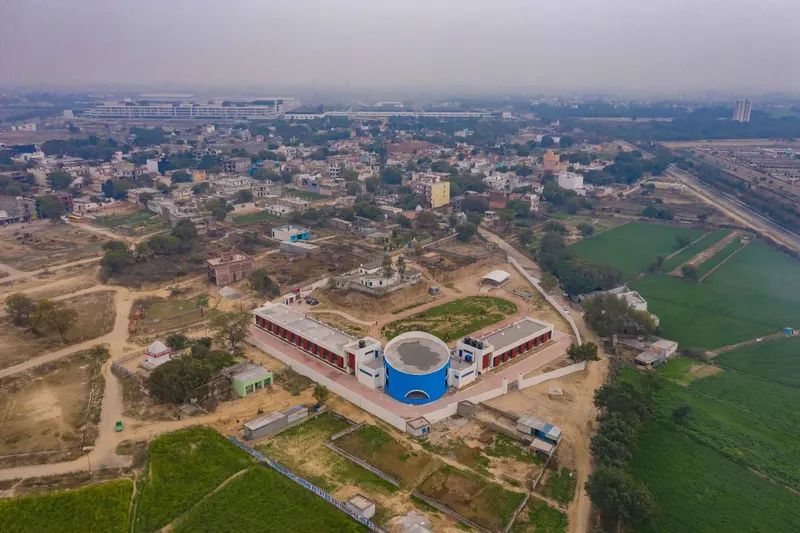
Set within the modest fabric of Luksar village on the outskirts of Noida in Delhi NCR, Sangam School emerges as a thoughtful architectural response to the delicate coexistence of rural identity and urban expansion. Conceived as part of the CSR initiative by SMC Corporation India Pvt. Ltd., the project replaces an aging government school with declining enrolment and limited facilities. More than an educational building, Sangam aspires to become a shared civic space- an architectural bridge between village and city.
Luksar, once defined by mustard fields and thriving birdlife, now stands at the threshold of rapid urbanisation. The irregular polygonal site, marked by steep contours and limited two-wheeler access to the earlier structure at its highest point, posed significant design challenges. Responding strategically, the architect repositioned the new building along the lower middle contour near the village temple- making it easily accessible to both villagers and the expanding urban population.
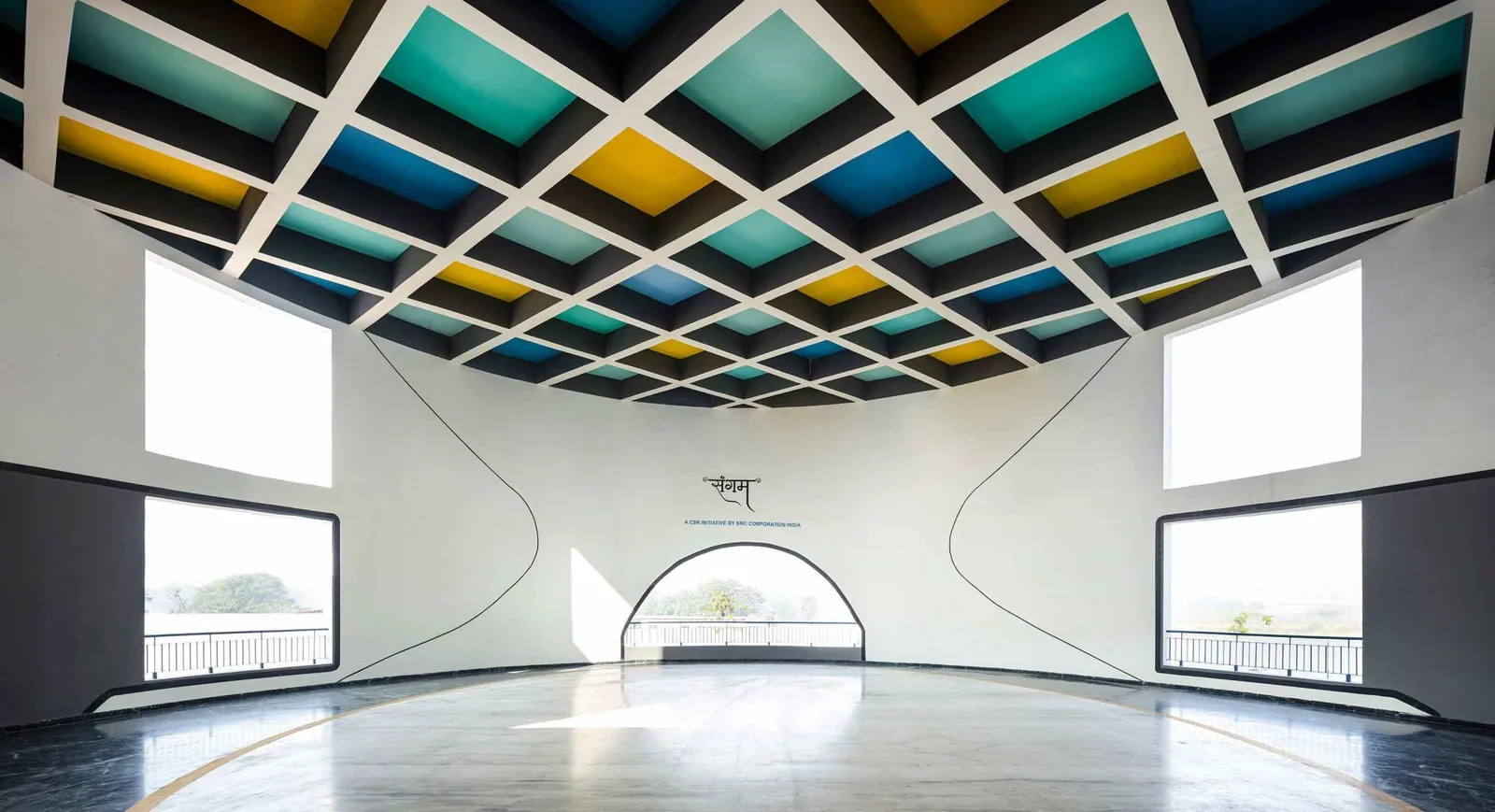
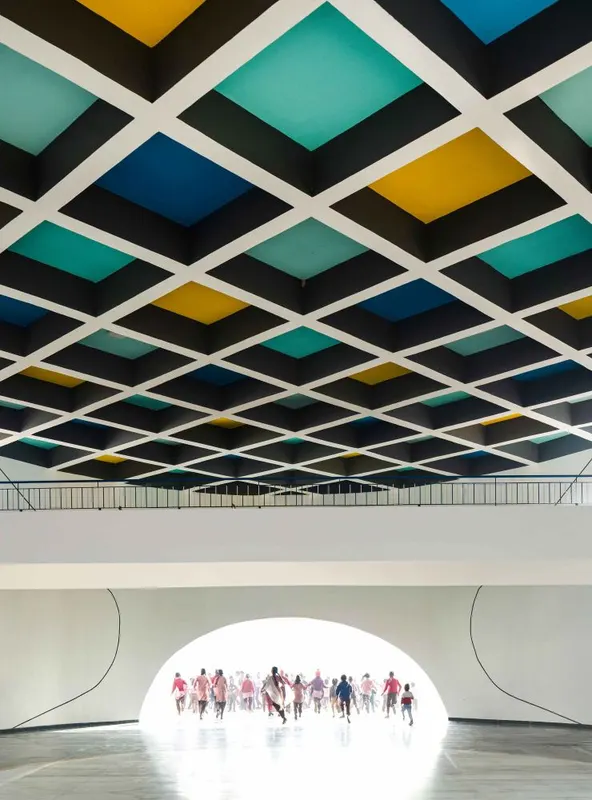
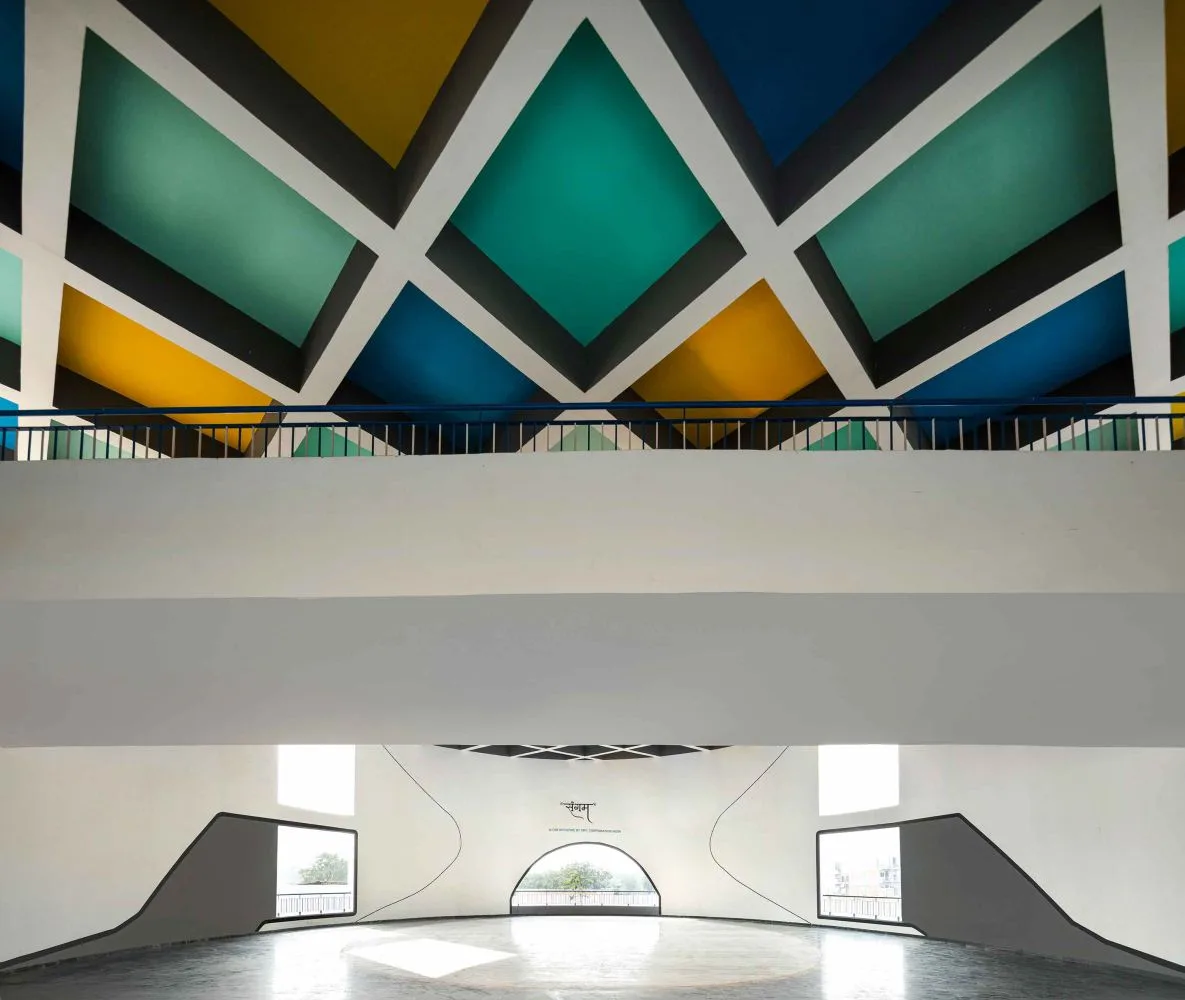
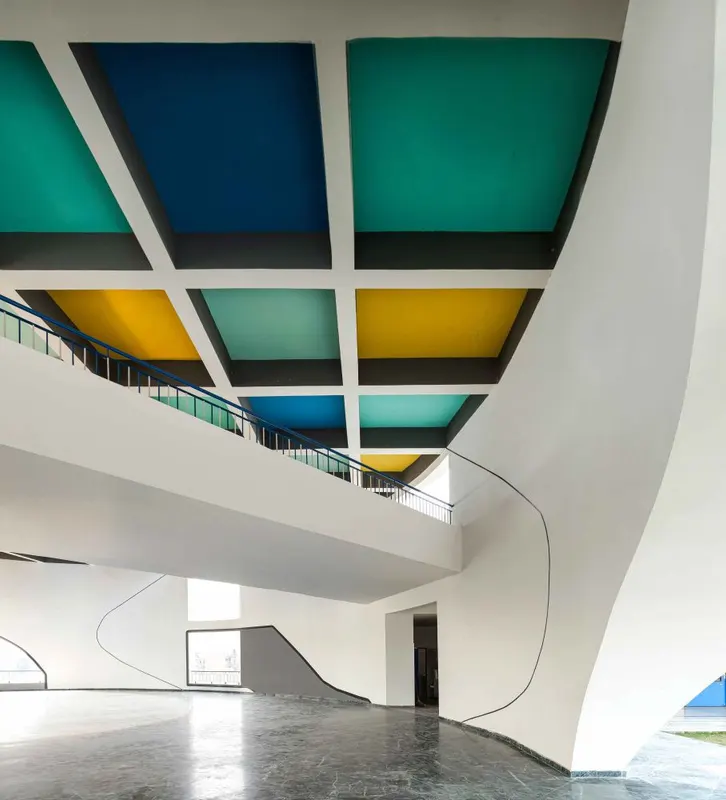
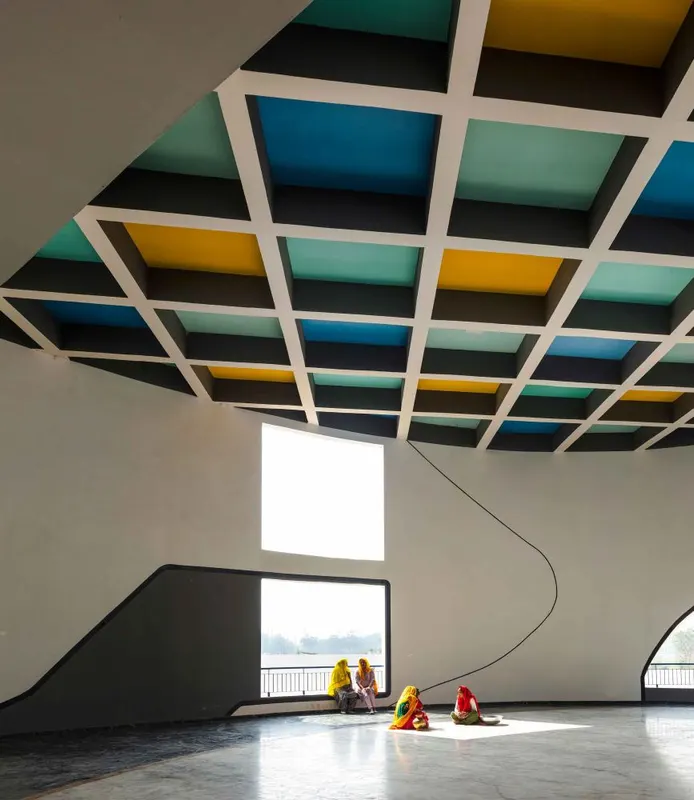
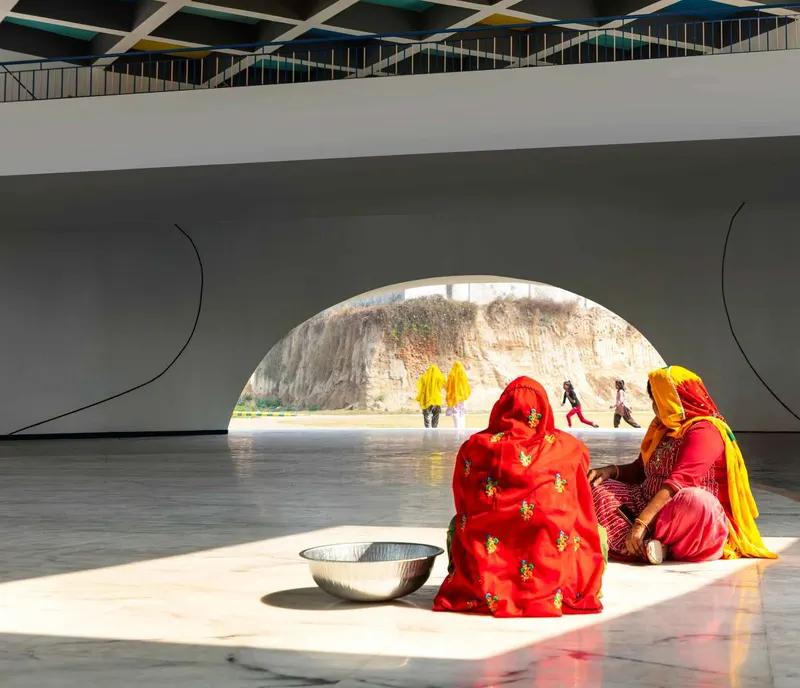
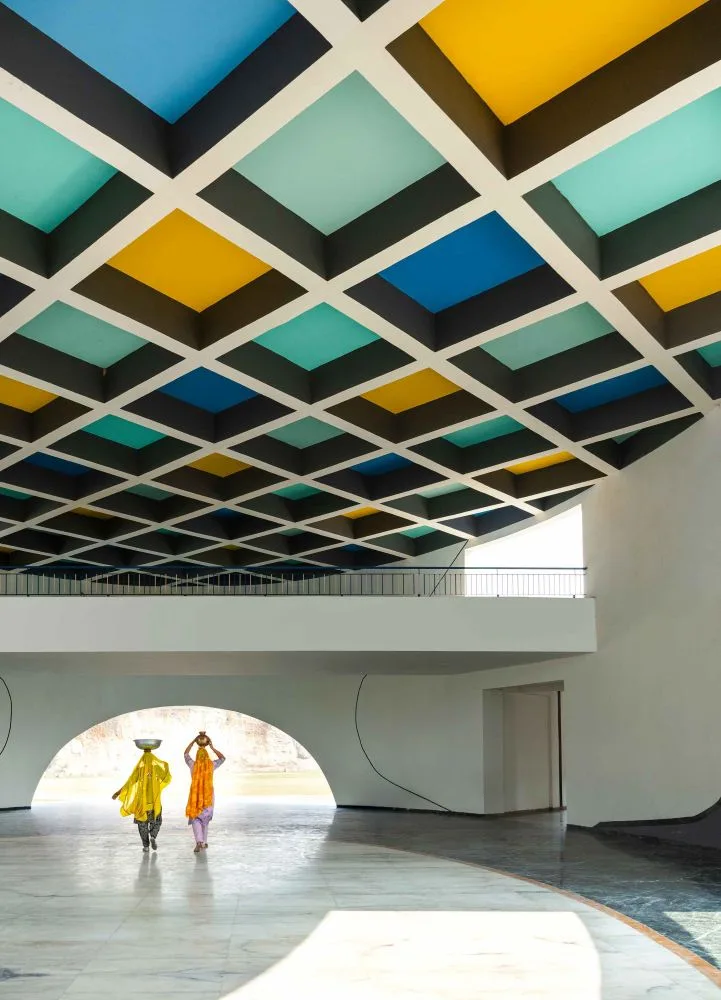
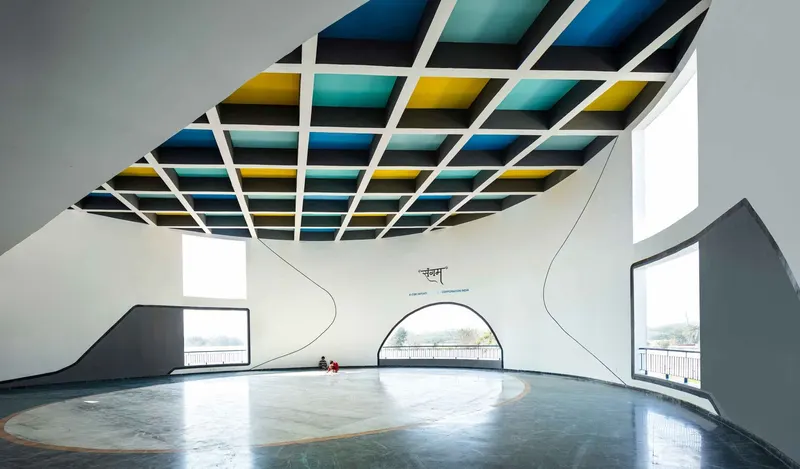
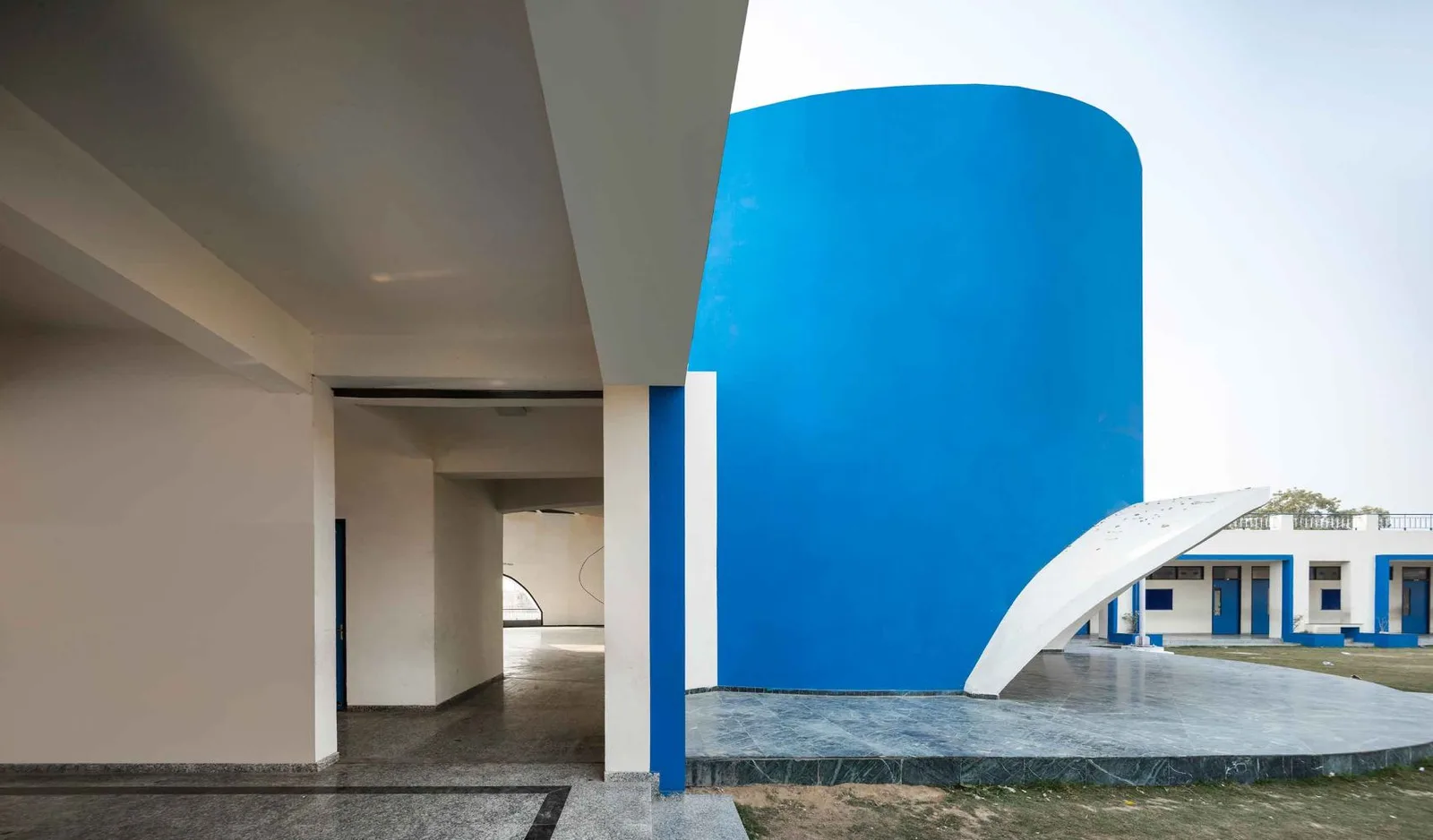
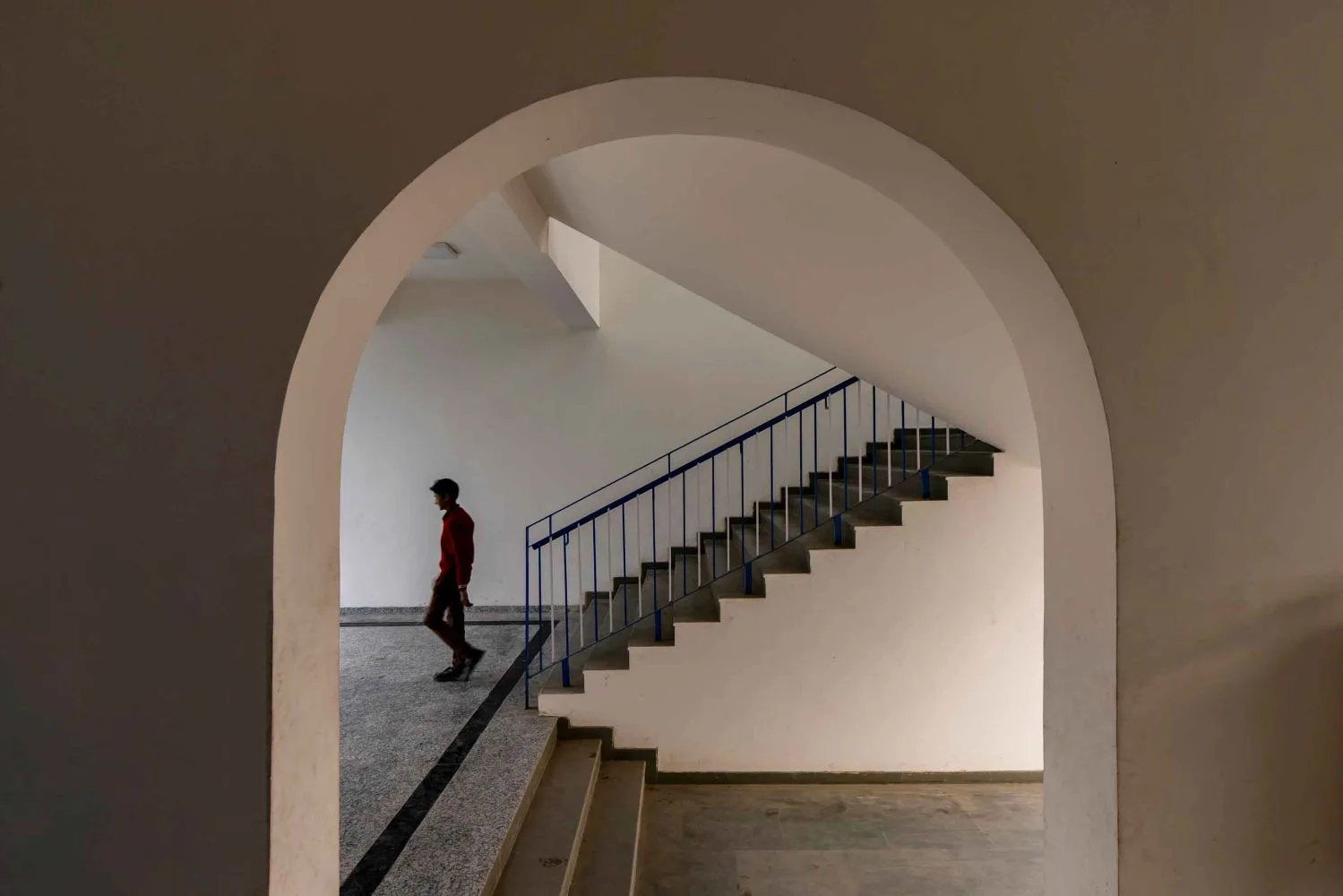
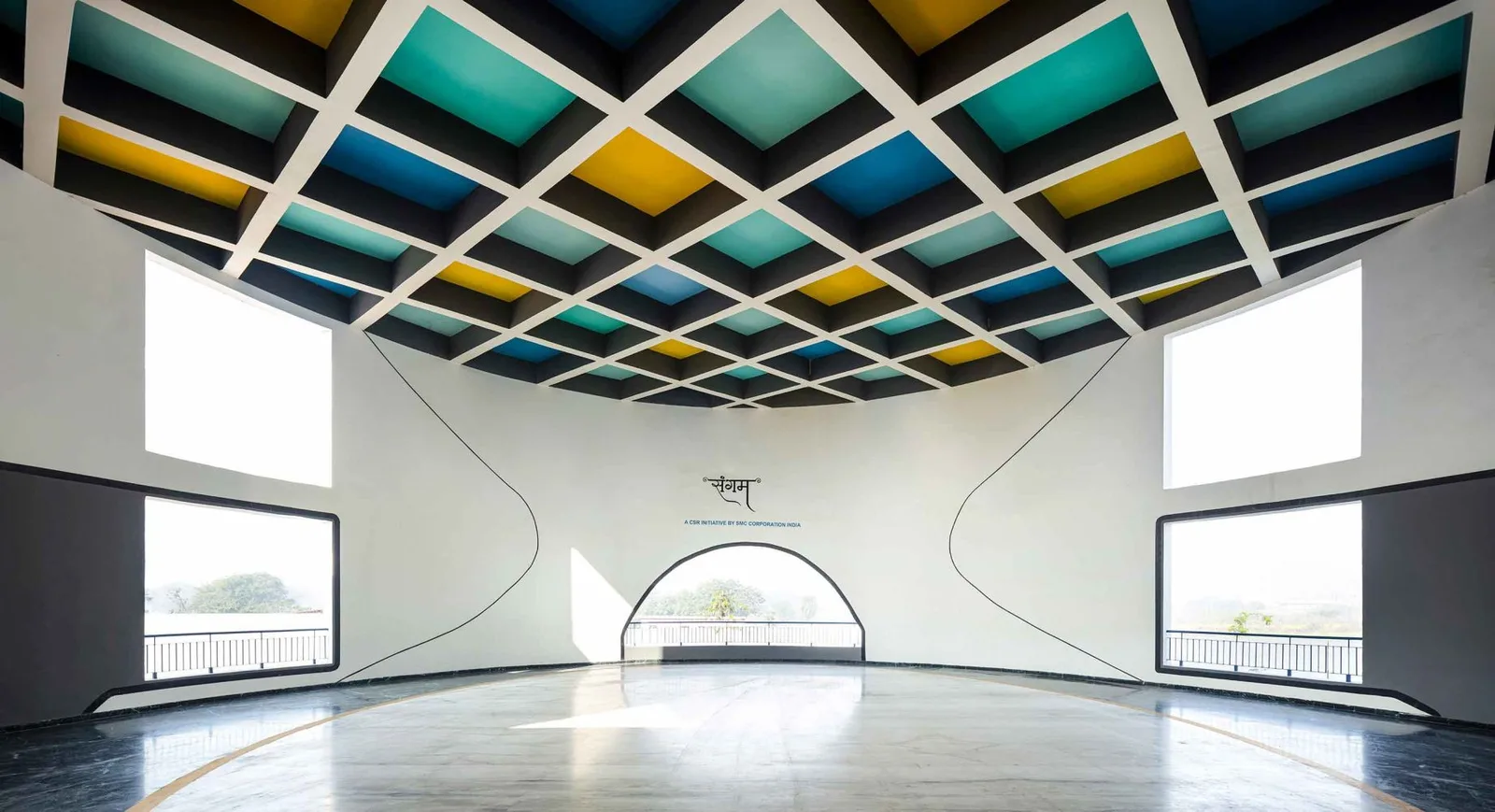
At the heart of the design lies the central open auditorium, aptly named Sangam, meaning confluence. This double-heighted volume with a coffered roof and graceful arched openings forms the emotional and spatial core of the campus. As daylight filters through shifting apertures, the hall becomes a dynamic canvas of light and shadow, framing views and evoking changing moods throughout the day. The space encourages interaction, creativity and collective gathering- serving both students and the wider community.
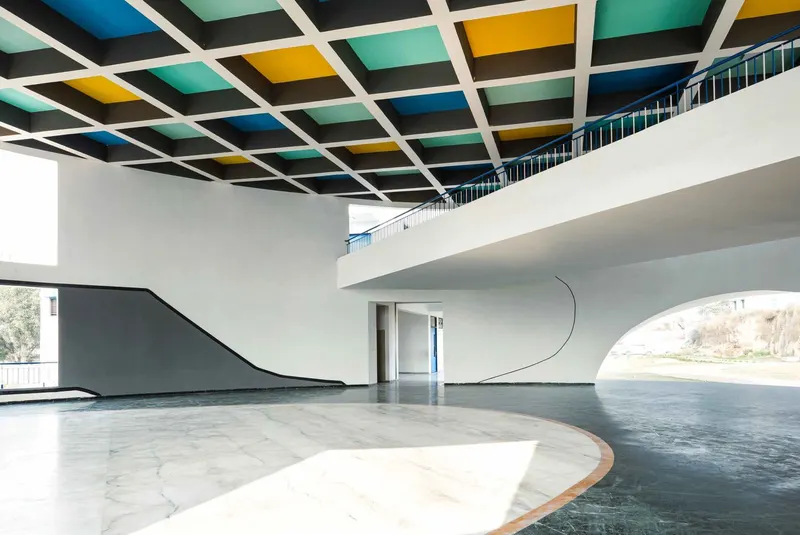
Climatic responsiveness plays a vital role in shaping the architecture. The building orientation maximises winter sun while minimising harsh summer glare, ensuring thermal comfort and energy efficiency. Neutral tones on the coffered ceiling echo natural freshness, while polished marble flooring reflects light upward, amplifying the sense of spaciousness. An elevated connecting bridge enhances circulation, reinforcing visual and physical connectivity across levels.
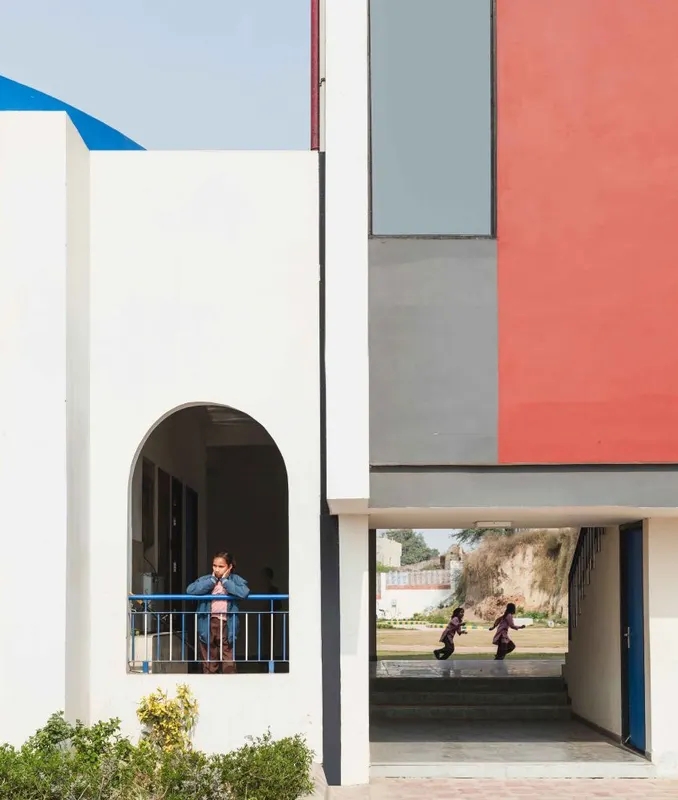
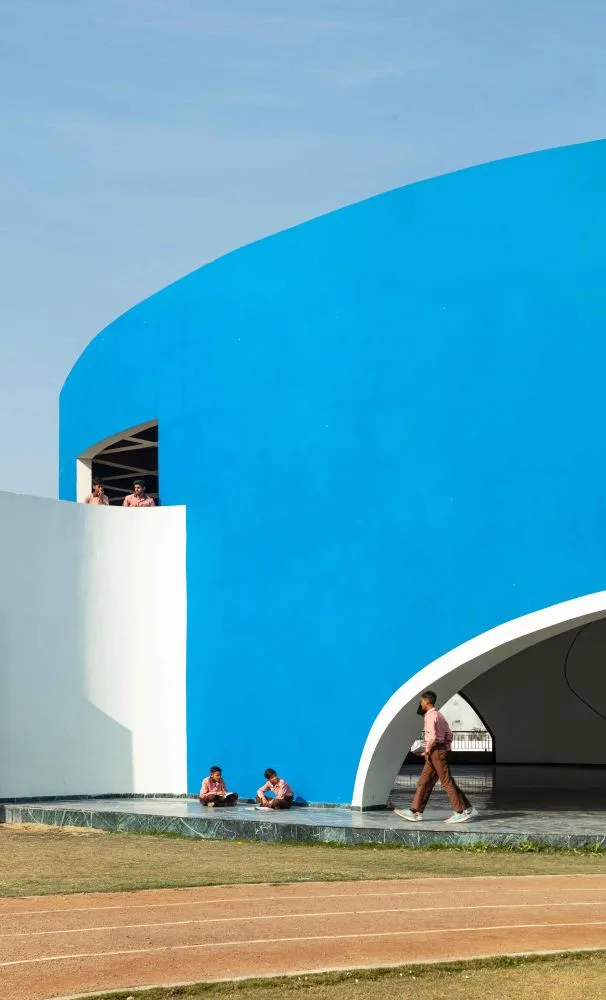
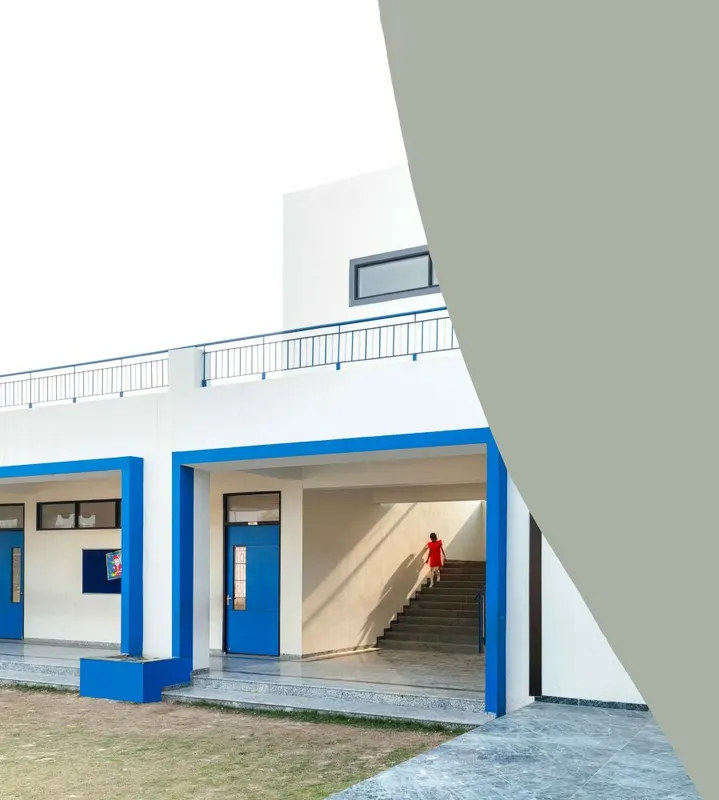
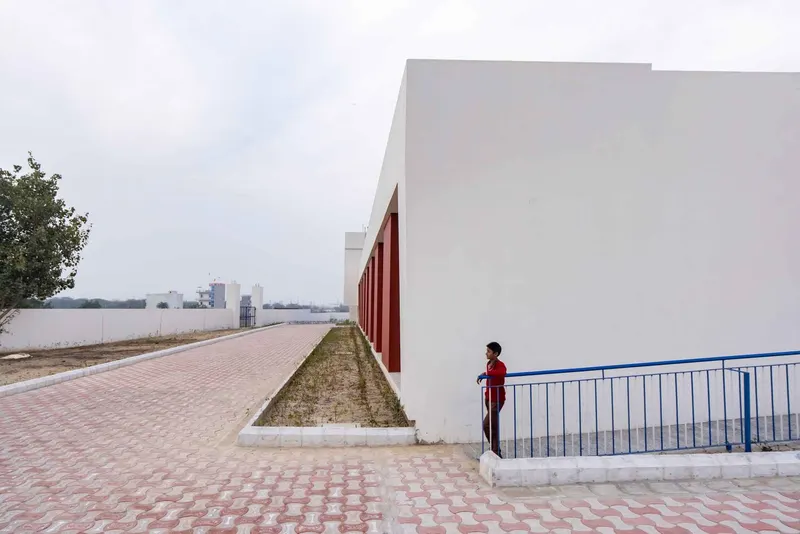
Architecturally, the bold oval mass of the Sangam hall stands as a symbol of aspiration and progress. It is juxtaposed against linear classroom blocks that provide order and familiarity. The resulting L-shaped configuration integrates classrooms and service areas seamlessly with the central hall. Verandas with rhythmic openings line the classrooms, functioning as galleries overlooking sports grounds during winter and acting as protective sunshades in summer.
Since completion, student enrolment has more than doubled- affirming the project’s social impact. For the villagers, Sangam is not merely a school; it is a public pavilion, a cultural node, and a platform for skill development programmes. Rooted in context yet forward-looking in vision, Sangam demonstrates how architecture can gently mediate transitions- between rural and urban, tradition and progress, education and community.
- Category
- architecture
- Type
- institutional
- Location
- Luksar, Delhi NCR
- Built-up area
- 17,650 sqft.
- Design firm
- Myspace Architects
- Principal designer
- Dona Alex