architecture
Sabarmati Ashram Museum
Featured work by Charles Correa · Ahmedabad · May 5, 2026
Designed by Charles Correa, the Gandhi Ashram Museum in Ahmedabad stands as one of India’s earliest and most significant examples of contemporary museum architecture. Conceived not as a monumental structure but as a quiet, introspective environment, the museum reflects the essence of Mahatma Gandhi’s philosophy- simplicity, humility, and deep connection to place.
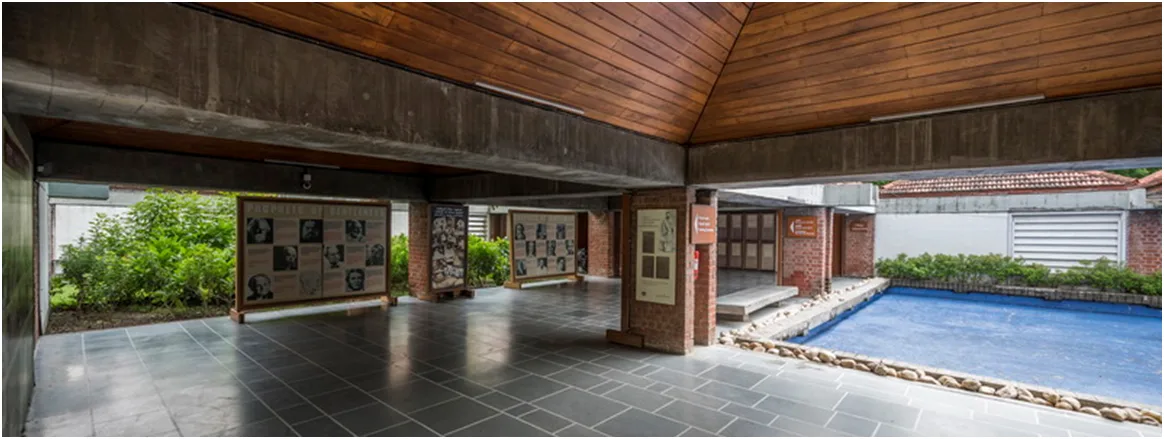
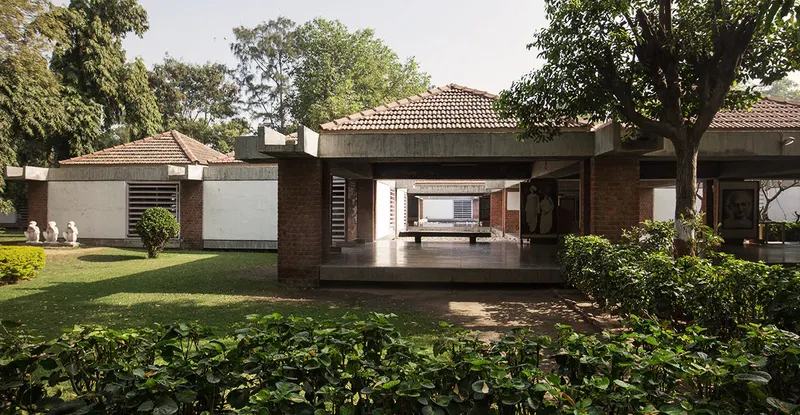
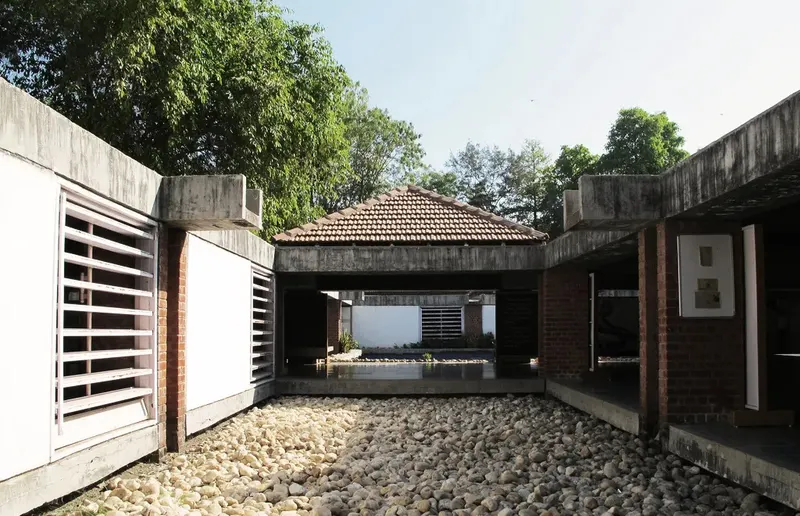
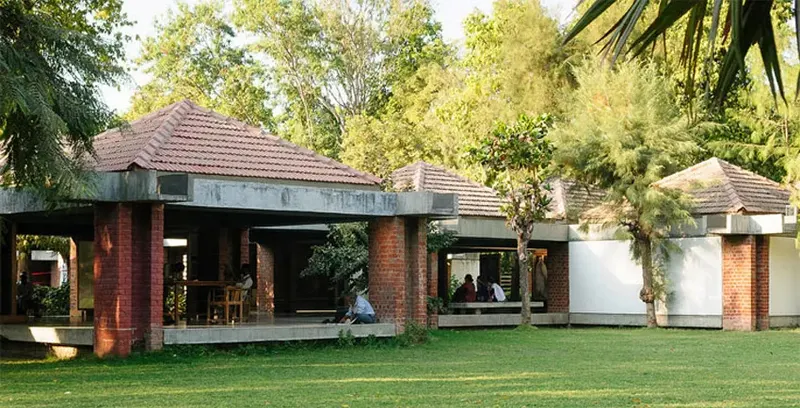
Set within the historic Sabarmati Ashram precinct, the design adopts a modular grid of low-rise pavilions organised around open courtyards. This fragmented layout breaks away from the idea of a singular, imposing institution, instead creating a human-scaled, walkable environment that encourages pause and reflection. The architecture unfolds as a series of interconnected spaces, allowing visitors to navigate the museum in a non-linear, contemplative manner.
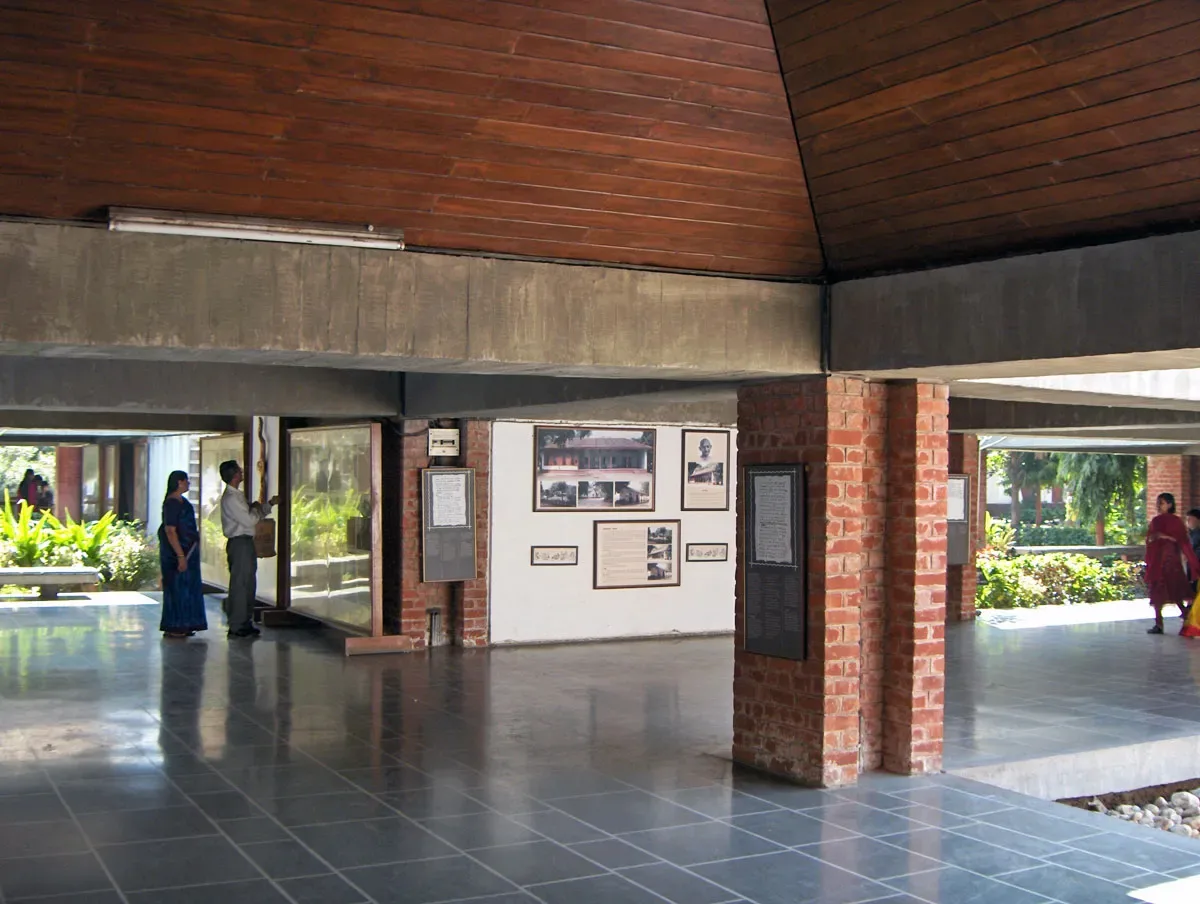
Correa’s use of a 6x6 metre structural grid establishes both order and flexibility, enabling incremental growth while maintaining spatial coherence. The repetition of sloping tiled roofs, exposed brick walls, and simple columns creates a rhythmic architectural language rooted in vernacular traditions. These elements are not merely aesthetic choices but are deeply responsive to the hot, dry climate of Ahmedabad- facilitating natural ventilation, diffused light, and thermal comfort.
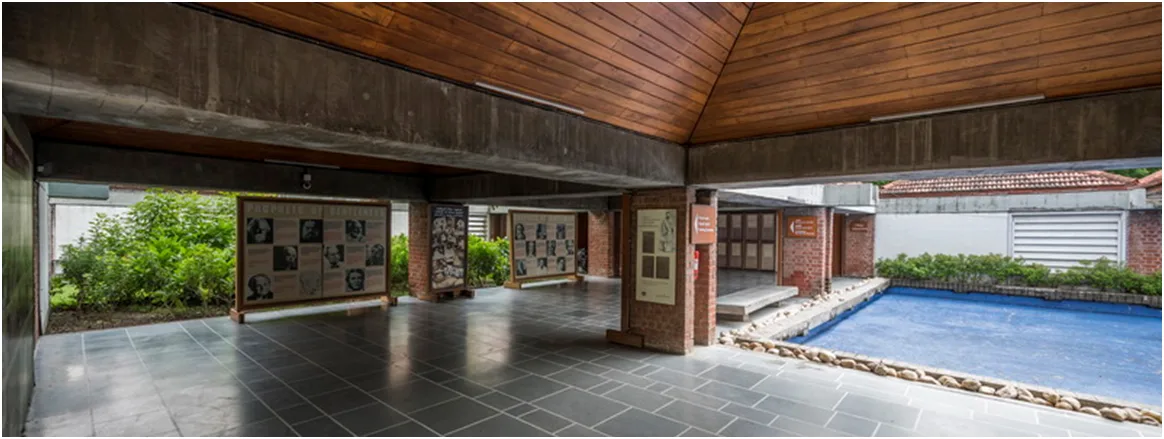
The interplay of built and open spaces is central to the experience. Courtyards act as transitional zones, mediating between interior galleries and the surrounding landscape, while also serving as spaces for gathering and introspection. Light filters gently through the structures, reinforcing the museum’s shaant, almost meditative atmosphere.
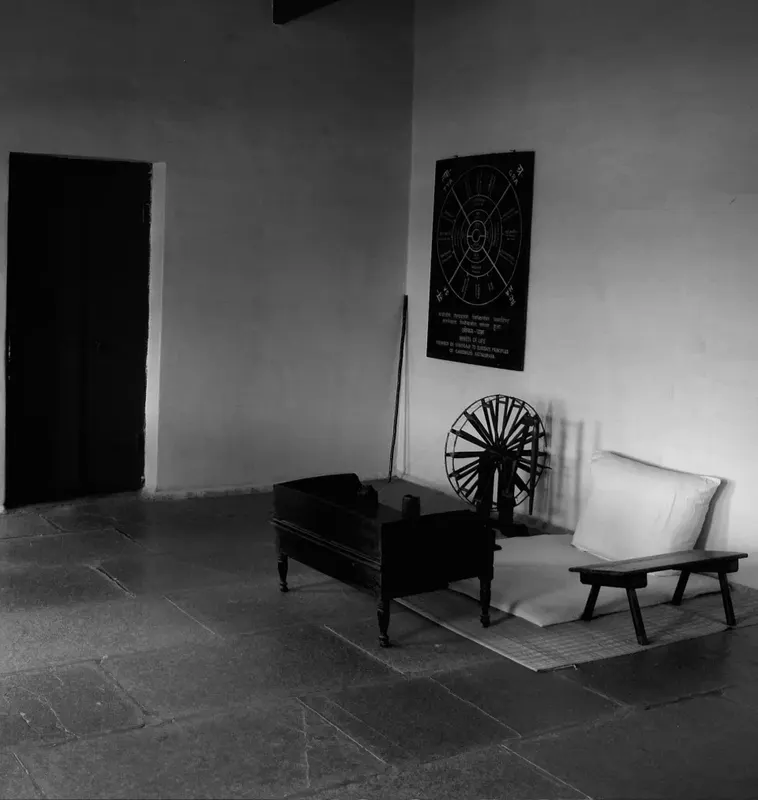
Inside, the galleries are modest and unassuming, allowing archival material, photographs, and personal artefacts to take precedence. The architecture deliberately recedes, framing the narrative rather than dominating it.
More than a museum, the Gandhi Ashram Museum is a spatial embodiment of an ideology. It demonstrates how architecture, through restraint and clarity, can evoke powerful cultural and philosophical narratives- setting a precedent for generations of museum design in India.
- Category
- architecture
- Type
- institutional
- Location
- Ahmedabad
- Principal designer
- Charles Correa