
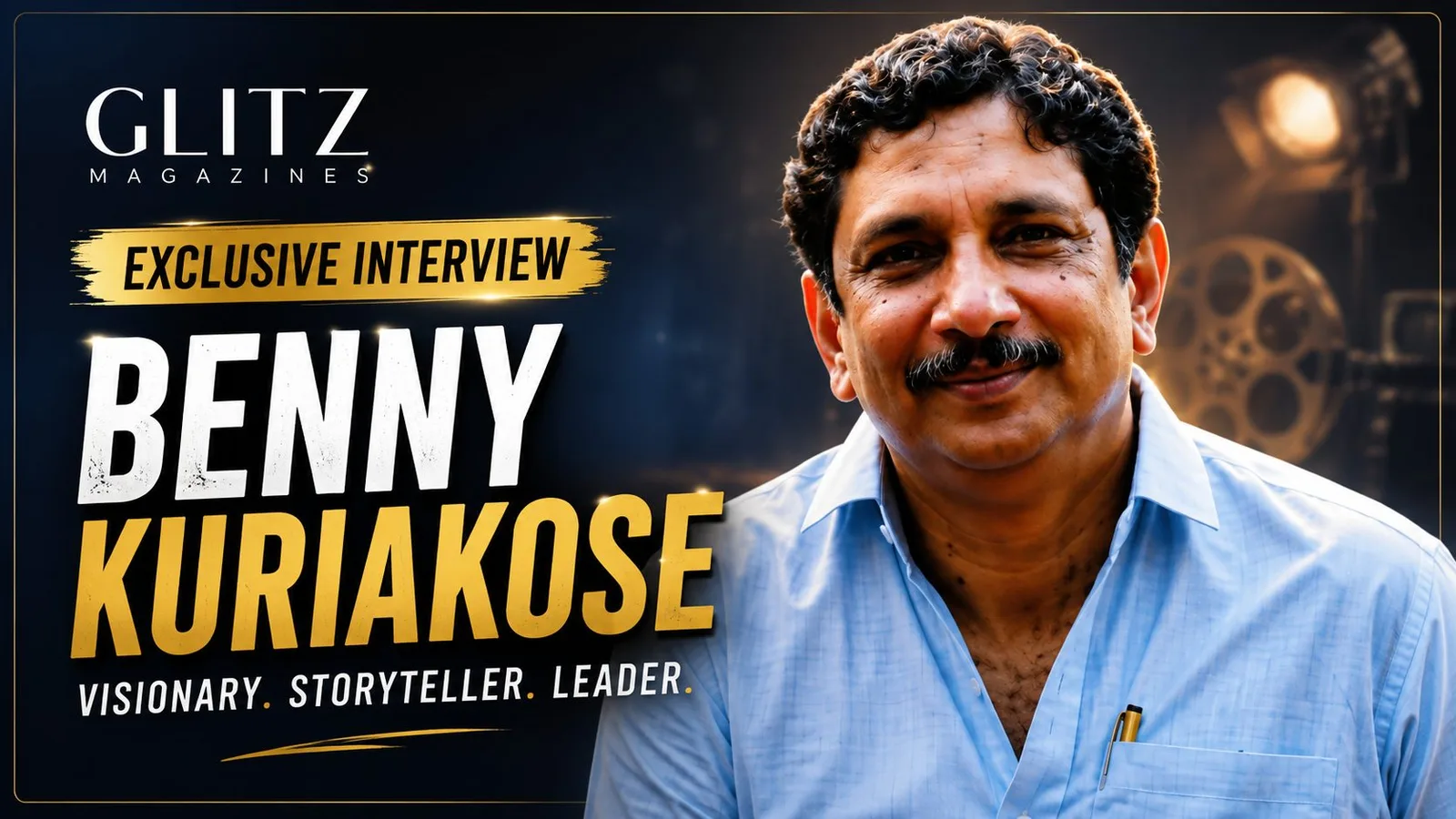
Benny Kuriakose & Associates is an architectural and conservation consultancy firm established by Dr. Benny Kuriakose in 1991. Over the years, the firm has grown to include a team of talented and creative designers, engineers, architects and audiovisual specialists. The primary aim of BK&A, as explained by the Dakshinachitra - Puthupally House T May 2025 firm, is “to develop high-quality architecture that respects historical context and the environment. We believe that architecture is not just limited to the design and structure of a building but goes way past that notion. We have aimed to create a diverse oeuvre of work and we will continue to design sensitive and sustainable architecture from the very small scale to the large with immense attention to detail and respect to the craft.” Dakshinachitra - Restaurant Veranda r. Benny Kuriakose shares with S u n e e t P a u l t h e k e e n , penetrative and reflective eye with which he approaches architecture:
Suneet Paul: Dr. Kuriakose, you have indeed been one of the few lucky professionals who had the great fortune to have worked with master-craftsman Laurie Baker who set the pace of Suneet Paul unraveling the pulse of vernacular architecture in India. How did working with him influence you, if at all?
Benny Kuriakose: Laurie Baker has been a profound influence on every aspect of my life — from my architectural designs to my thinking, values, and overall perspective. This influence is particularly meaningful to me because I do not hold a formal degree in architecture; it was through him that I learned the foundational principles of the field. At a certain point in my career, I made a conscious decision to stay true to his core values and ideals, while also evolving my architectural approach to suit changing contexts. After all, there is a significant gap between the time he practiced and the realities of today. The challenges of global warming and climate change now play a major role in shaping architectural practices, demanding new responses and adaptations. SP: One significant aspect that stands apart in your practice is the sensitivity and respect that you give to the context, cultural background and regional locale of the project. The materials and spaces are in harmony with the close environs and communicate a silent symphony. Could you share a bit about your initial governing approach to each project--. BK: Architecture encompasses many dimensions — technical, climatic, T May 2025 Dakshinachitra - Reception Courtyard cultural, social, environmental, psychological, economic, aesthetic. What Laurie Baker instilled in me is the importance of being sincere and truthful to the context. Those principles continue to guide my work. When I design, I strive to ensure that all these dimensions are in harmony, because they collectively shape the success of any architectural design. I believe that true beauty in design emerges when it is rooted in honesty and relevance to its surroundings. Naturally, the way you design for Kerala will differ from how you approach a project in Odisha — each place demands its own response. Anantya Resorts T May 2025 Dr. Benny Kuriakose started his career in 1984 and received basic lessons in architecture under the tutelage of the renowned Laurie Baker. In 1986, he received the Charles Wallace India Trust award that enabled him to complete his MA in Conservation Studies from the University of York. After backpacking around Europe, he returned to Kerala and engaged in various activities, such as running a successful furniture company, before pursuing his true interest in architecture. He relocated to Chennai to develop the project that would become the cultural center, Dakshinachitra. Benny Kuriakose has been the recipient of political, and some very significant awards. He has also worked as a consultant for the United Nations Development Program (UNDP), UNESCO, different state governments, and non-governmental other organizations. The diverse portfolio of the practice extends to different typologies with emphasis in giving a newer meaning to contemporary vernacular.
Anantya Resorts - Cottage Blocks SP: In this contemporary architectural phase where global trends are a preference, your practice has kept steadfast and focused in innovatively redefining the modern-day responses to the vernacular idiom. I'm sure it's not been an easy run to bring the clients' around or has it been that it is your clientele which has motivated you to tread this path?
BK: There is a growing disillusionment among the general public with what is commonly referred to as "Modern Architecture"—often criticized as monotonous, box-like forms and dense concrete landscapes. It is our professional and ethical responsibility to offer meaningful alternatives that respond to both cultural and environmental needs. I am firmly convinced that drawing from our architectural heritage — the principles, materials, and techniques Bharata Kalashettram employed by our ancestors — provides a more contextually appropriate and climate-resilient framework in the face of global warming and environmental degradation. There is a significant and increasing demand for the kind of context-sensitive, sustainable architecture that we practice. However, our capacity currently allows us to address only a small portion of this need. Ultimately, architecture should not be judged by style or era, but by quality — there is only good architecture and bad architecture. Bharata Kalashettram interior T May 2025
SP: In a country with over five thousand years of heritage, it is disillusioning to s e e t h e l a i d - b a c k approach of the State G o v e r n m e n t s a n d professional institutions to restoration, conservation and preservation of the vernacular traditions. Our society also, I think, needs to be made conscious of the wealth of learning that our v e r n a c u l a r d e s i g n encapsulates. With your Port Museum T May 2025 Port Museum Exhibition Spaces vast experience and being a contemporary icon in this field, how do you think can the love for the vernacular be revived?
BK: Awareness surrounding architectural heritage has increased significantly over the past few decades. Forty years ago, the demolition of a historic building would often go unnoticed; today, such an act at the very least attracts public and media attention. While this marks progress, it also underscores the critical role professionals must play in further elevating public consciousness on issues of heritage conservation. Governments are generally reluctant to act contrary to public sentiment — at least in the public domain — which makes informed public opinion a powerful tool for conservation. However, this is an inherently slow process, and it is important to avoid overly romanticizing the past. Our architectural heritage is both rich and beautiful; it must not only be conserved but also studied, so that the knowledge embedded in it informs the creation of more meaningful, sustainable architecture for the future.
SP: Very often, sustainability and the vernacular are associated very closely. How do you look at their complimenting each other?
BK: It is important to avoid the romanticized notion that all vernacular practices are inherently sustainable. While building with earth can be environmentally responsible, its sustainability is compromised if the construction process leads to land degradation or ecological imbalance. Similarly, timber is often regarded as one of the most sustainable materials due to its renewability and carbon retaining potential. However, if its procurement involves deforestation of natural forests or unethical practices such as child labor — as reported in some parts of Africa — its sustainability becomes deeply questionable. Huilekere House interior Huilekere House Stone, too, is a natural and time-tested building material used extensively across various regions across the world. Yet, when sourced from large-scale quarries that contribute to environmental hazards such as landslides or biodiversity loss, its use must also be critically evaluated. Sustainability, therefore, is not determined solely by the material, but by its lifecycle impacts — including sourcing, processing, transportation, and social implications. T May 2025 Sankalp School s u c h a s n at u ra l SP: The twenty-first century faces daylighting, orientation etc. — to its own set of challenges. Climate reduce energy consumption change, deterioration of the address thermal environment due to pollution, waste conservation, green disposal, chaotic pace of urbanization a n d b i o d i v e r s i t y - s e n s i t i v e and such other concerns are but landscaping are also key aspects. some of them. In your architecture, how do you address these ever- M o s t i m p o r ta n t l y, increasing threats to our habitat? architecture must align with local cultural and environmental contexts.
BK: The twenty-first century indeed Learning from traditional practices presents a complex set of challenges a n d a d a p t i n g — climate change, environmental contemporary techniques allows us degradation, unsustainable waste to build in ways that are both resilient management, and rapid, often and sustainable. unplanned urbanization among them. As a professional, I believe our response must go beyond aesthetics SP: In a rapidly developing country and functionality to embrace such as India with over 1.4 billion ecological responsibility and population, would you not think that contextual relevance. In my practice, we need to also bring society to I prioritize a site-sensitive and consider building climate-responsive approach. This technologies using involves passive design strategies — sourced from the region?
T May 2025 ve nt i l at i o n , BK: Rather than framing the conversation around alternative and technology, it is more constructive to comfort. Water focus on appropriate technology — infrastructure, solutions that are context-specific, need-based, and sustainable. The challenges before us are complex and multifaceted. As a developing I b e l i e v e nation, India too deserves to experience the benefits of growth and progress. t h e m w i t h However, we must recognize that climate change is a global crisis, extending beyond borders — unlike localized environmental issues such a s p o l l u t i o n , w h i c h d i s p r o p o r t i o n a t e l y a f f e c t underdeveloped regions. In this context, it becomes imperative to c o n s i d e r t h e l o n g - t e r m with alternative consequences of our actions, with a local materials clear responsibility toward future generations. Such a shift in perspective — from past with the demands short-term gains to long-term p r e s e n t . I t i s development — has the potential to acknowledge that, as a profession, fundamentally transform the way we architecture currently think, plan, and build. than two percent of the population — and my own work, by extension, SP: By and large, modern-day largely addresses architecture has also been associated segment. with a certain glitz and glamour. I personally feel there is an equal There is a pressing need to demystify soothing and calming glitz and architectural practice, glamour in your approach to more inclusive, aesthetics in architecture evolved oriented toward the broader public. through creative and deft handling of B r i d g i n g t h i s the vernacular elements. Your professional practice and the needs comments--. of the majority remains a significant challenge — and we still have a long BK: I pursue what I believe to be the way to go. right approach in my practice.
However, architecture is inherently a SP: There are so many students and collaborative process, and clients young professionals who are ardent play a significant role in shaping followers of your style and vision for design decisions. My choices are not present and futuristic about rejecting modernity, but solutions closely related to nature. about integrating the wisdom of the Would you have a word for them?
Sankalp School Corridors Spaces of the BK: Vernacular architecture should i m p o r t a n t t o not be adopted merely as a stylistic approach. Style, in itself, is serves less superficial; what we need is a deeper involvement with the broader issues and values that form our work. It is a this limited vast knowledge system, which has been handed over from one generation to the other. When you begin to think along these lines, your to make it design approach will naturally evolve accessible, and and it will be different. g a p b e t w e e n It is essential to critically examine and challenge practices that are no longer relevant or sustainable in the context of our future — both environmentally and socially.
Courtesy: Benny Kuriakose & Associates (May 2025)