architecture
The Aldott
Featured work by Ankita Sweety · Gurugram · February 13, 2026
Set within the fast-evolving urban landscape of Gurugram, The Aldott Hotel presents a thoughtful interpretation of contemporary Indian hospitality- one that seamlessly bridges modern design sensibilities with traditional architectural wisdom. Envisioned as a “homebase for global nomads,” the boutique hotel transcends conventional accommodation, offering a space where work, leisure, and community coexist within a culturally grounded and sustainable framework.
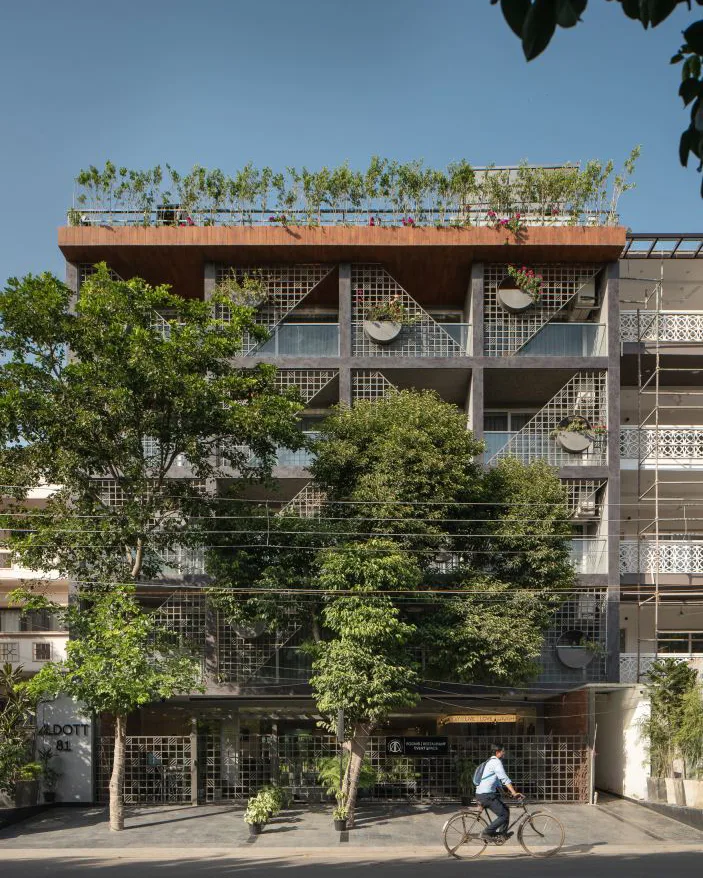
Located on Moulsari Avenue in DLF Phase III, the hotel responds to its context with a design philosophy rooted in balance- between luxury and restraint, modernity and heritage, exclusivity and inclusivity. The architectural expression draws from India’s vernacular traditions while addressing contemporary concerns of climate responsiveness and human-centric design.
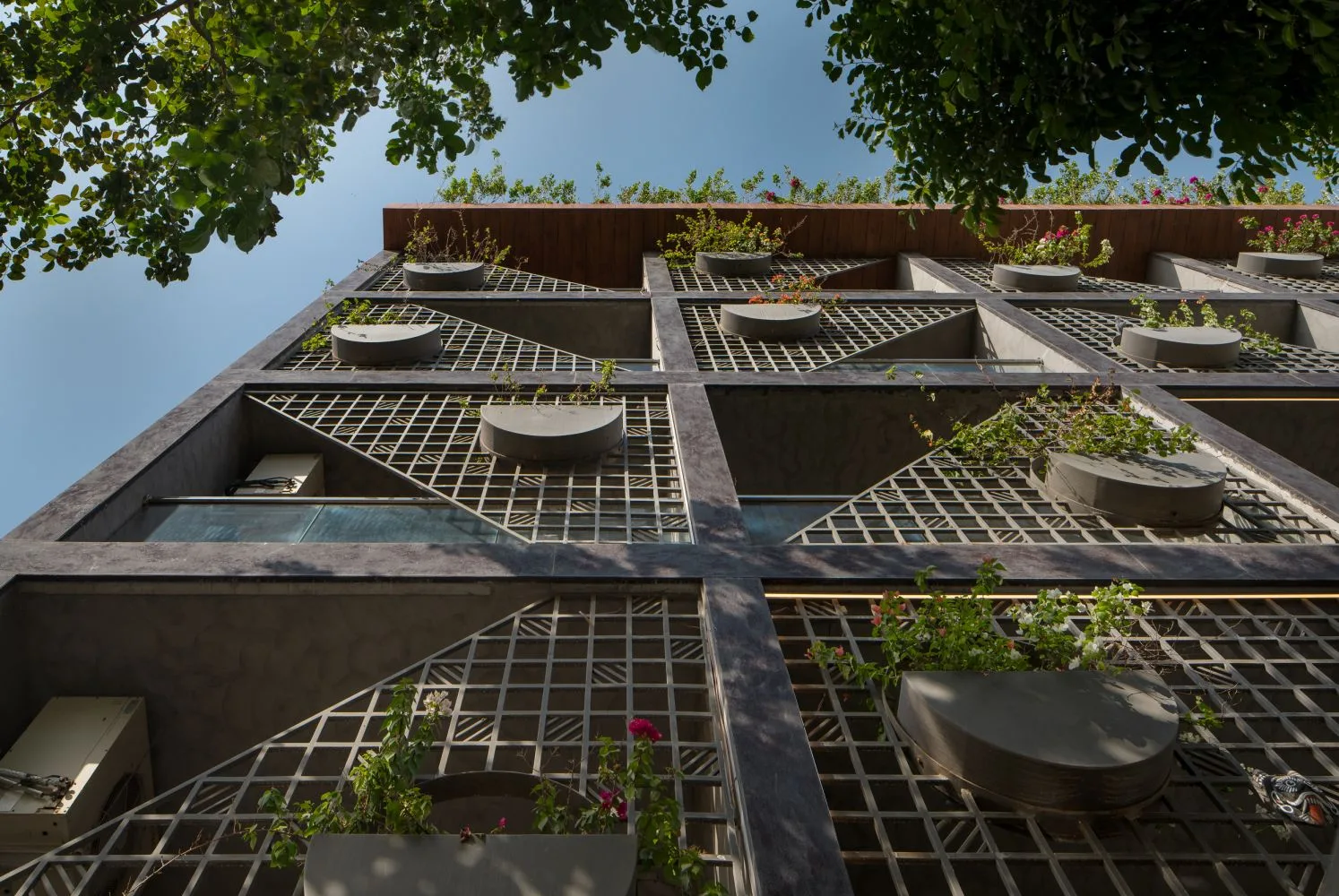
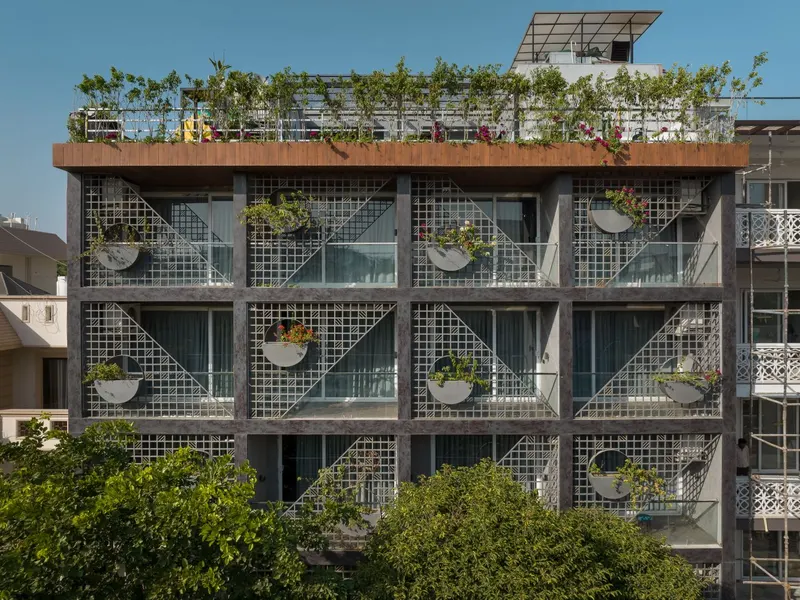
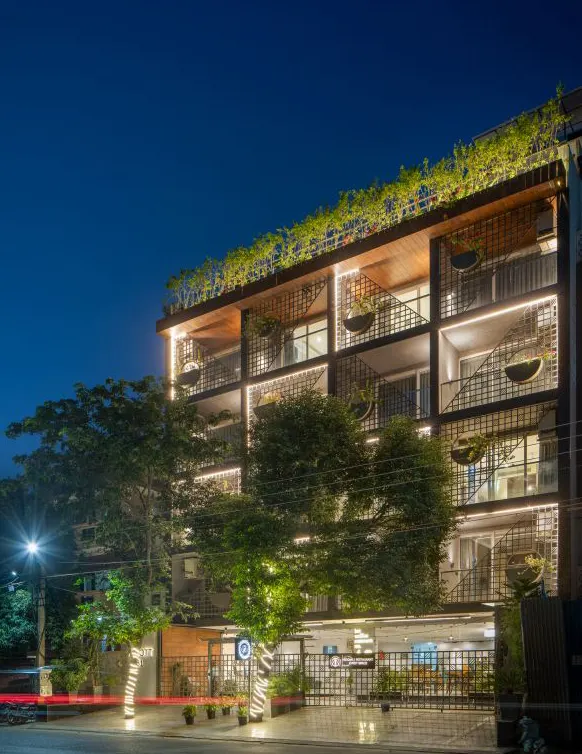
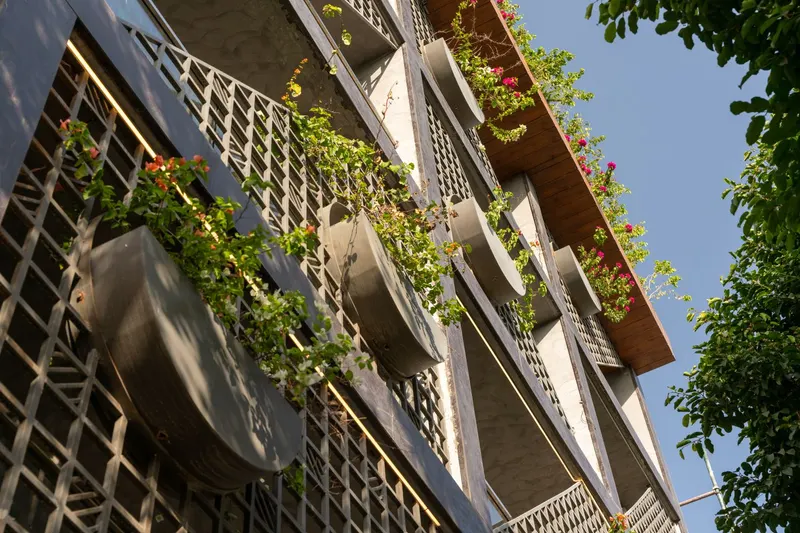
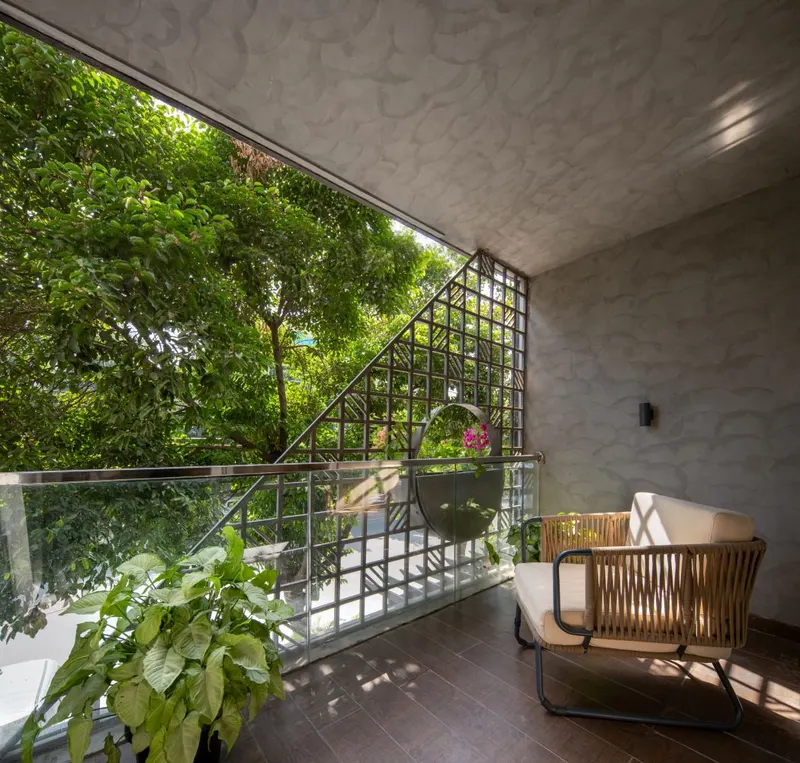
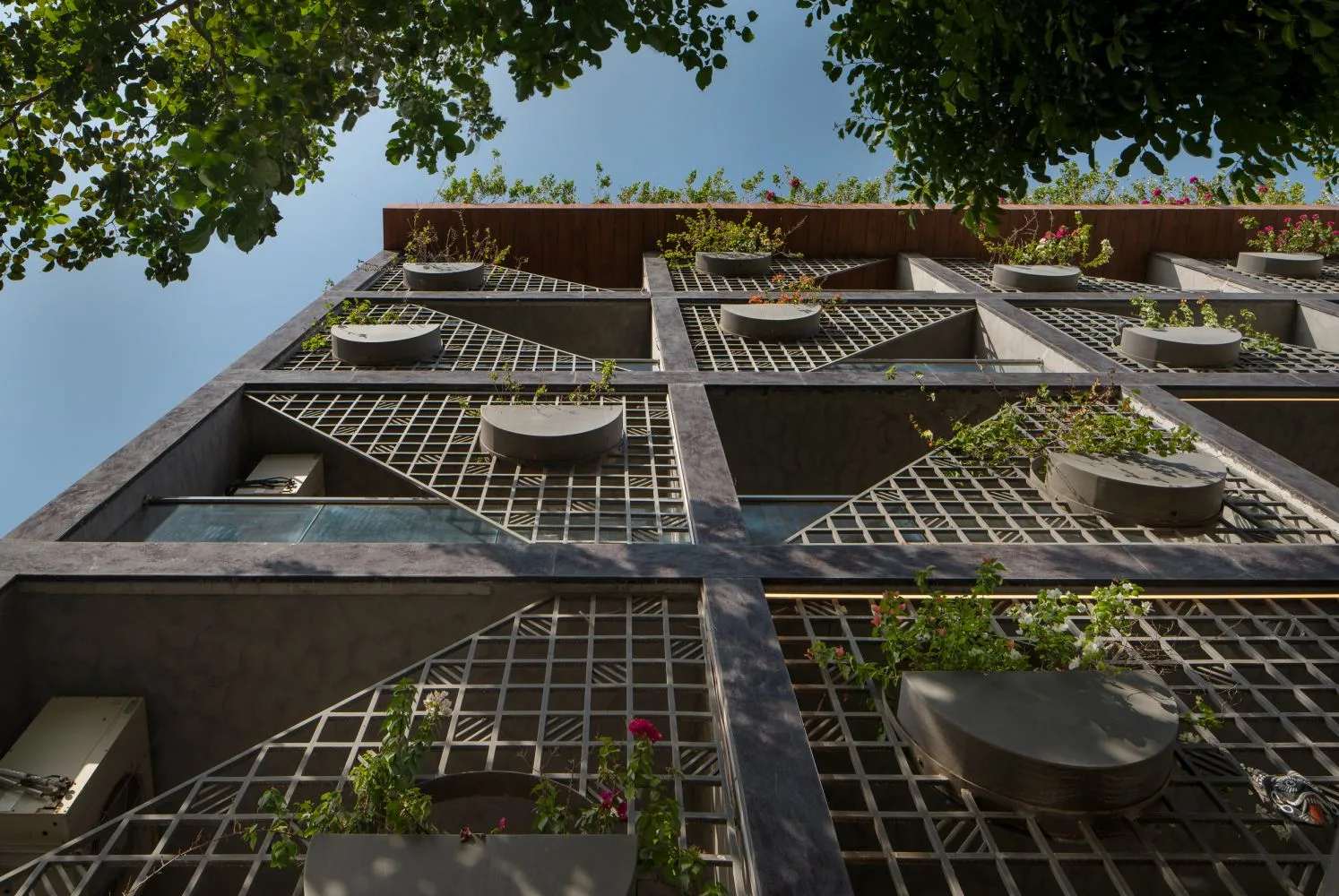
The southwest-facing façade becomes the project’s defining feature, articulated through reinterpreted jali screens. These geometric lattice elements serve as both cultural signifiers and passive design devices, mitigating heat gain and glare while animating the building envelope with shifting patterns of light and shadow. Crafted using a restrained palette of locally sourced stone, natural wood, and textured concrete, the architecture exudes warmth, durability, and regional identity.
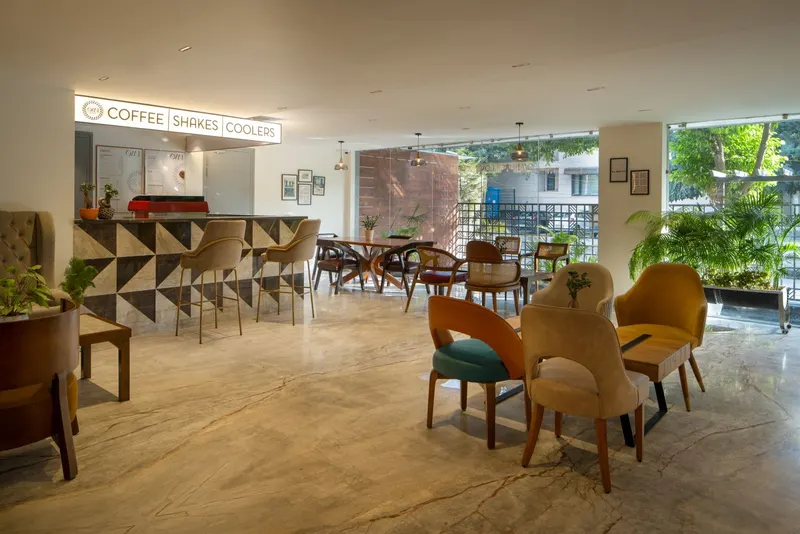
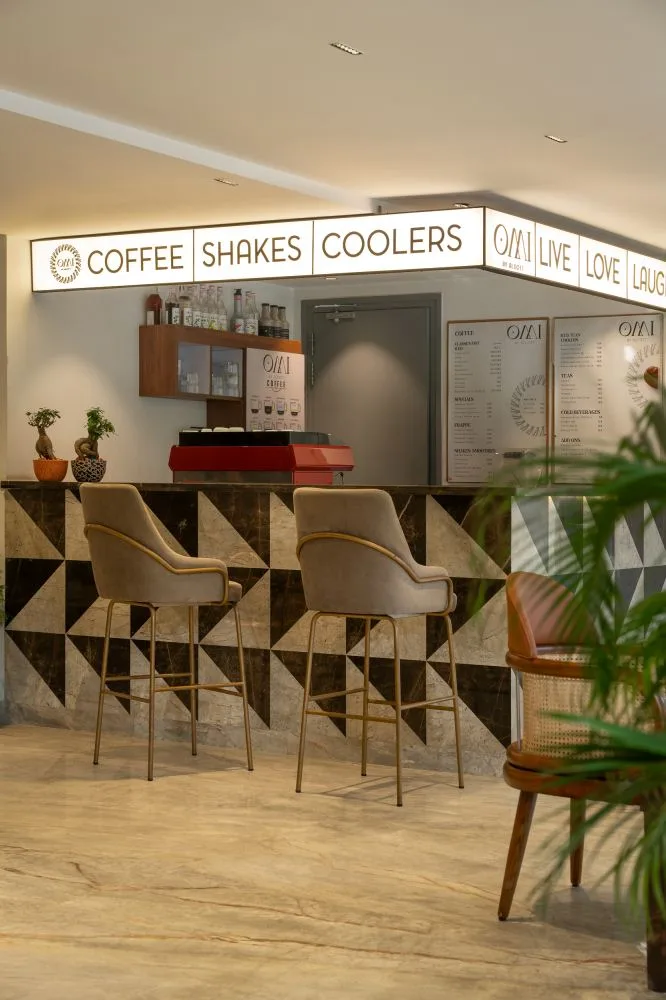
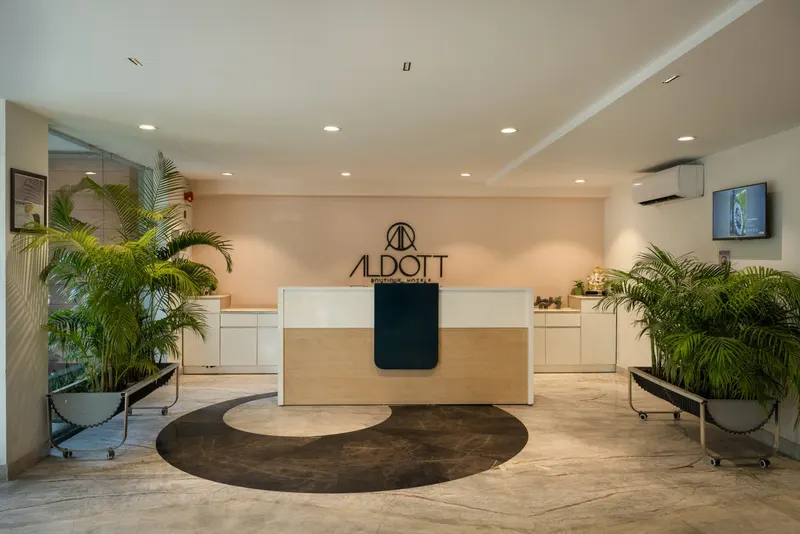
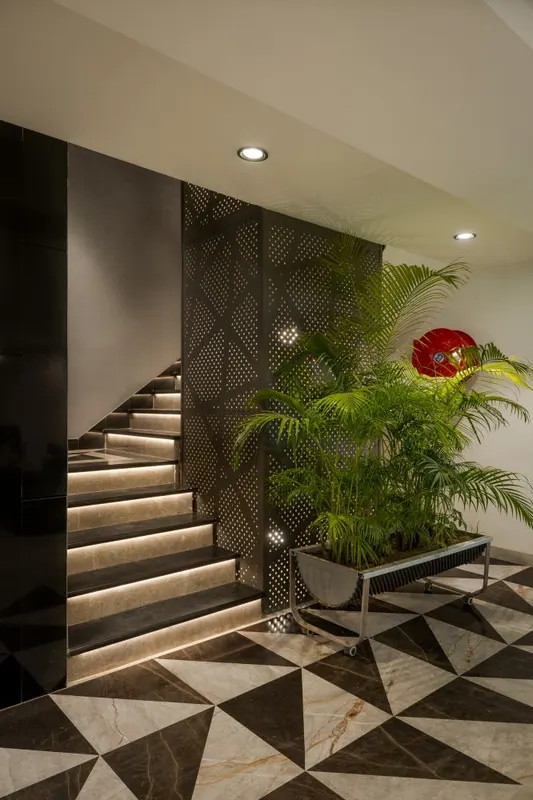
The arrival experience unfolds into a welcoming lobby that sets the tone for the hotel’s ethos of relaxed sophistication. A curated library and café encourage informal interaction, while a living green wall introduces biophilic principles that enhance well-being. The spatial sequencing prioritizes openness, visual connectivity, and comfort.
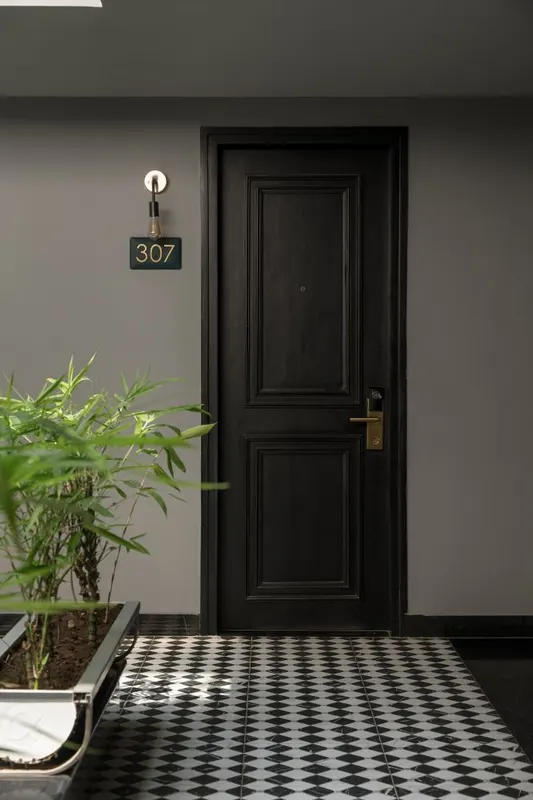
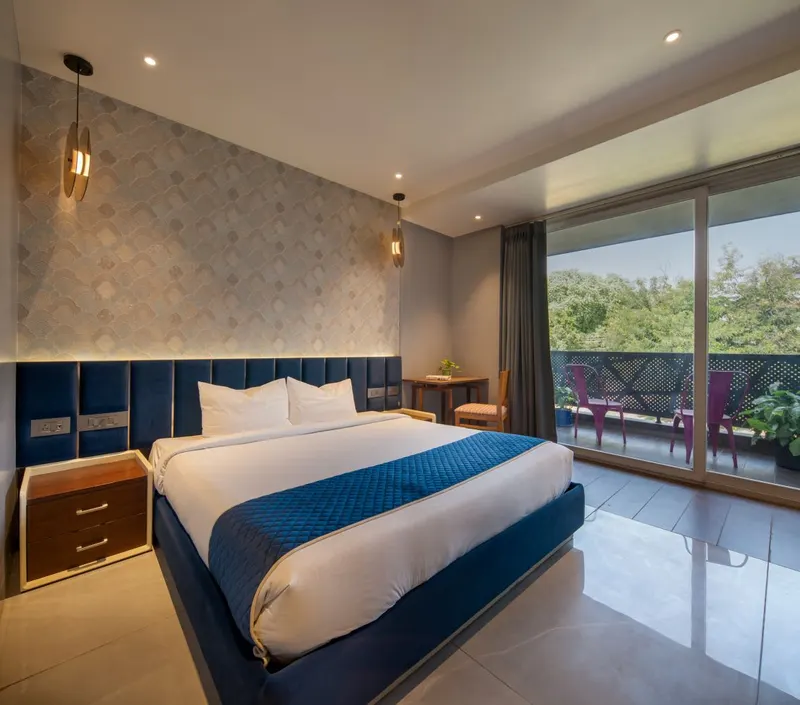
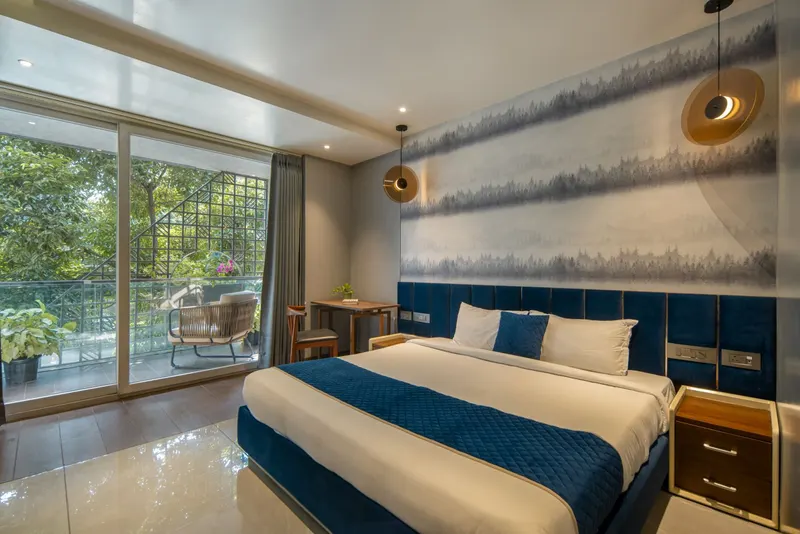
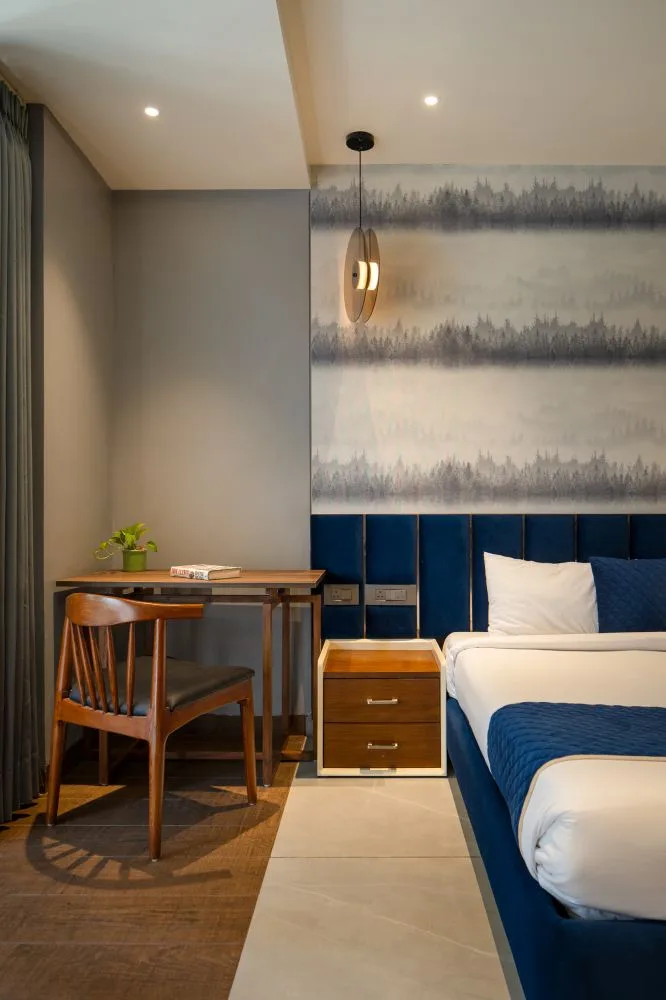
The 32 guest rooms are conceived as intimate retreats, blending minimalism with cultural nuance. Each room opens onto a private balcony shaded by a triangular jali, creating a semi-outdoor extension that enhances privacy and thermal comfort. Interiors are defined by earthy tones, natural materials, and handcrafted details, offering adaptable spaces suited for work, rest, or reflection.
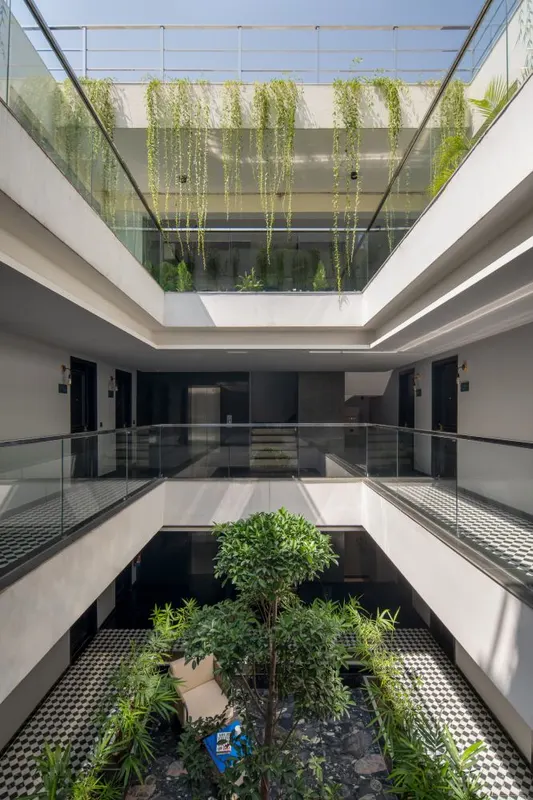
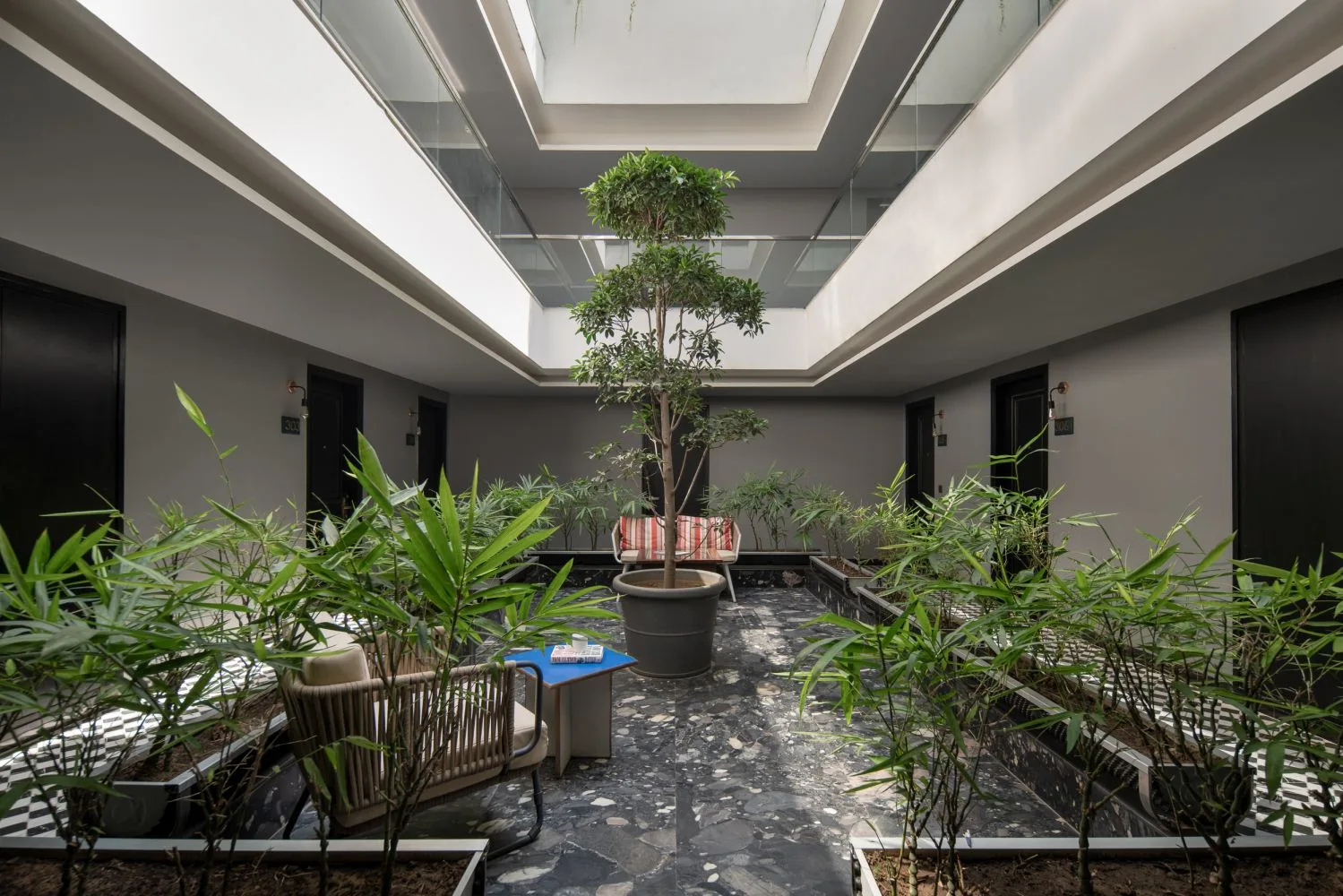
At the heart of the hotel lies a serene second-floor courtyard- an inward-looking oasis inspired by traditional Indian spatial planning. Featuring native landscaping, a water element, and vibrant artworks, the courtyard functions as a communal pause point, blurring the boundary between indoor and outdoor living.
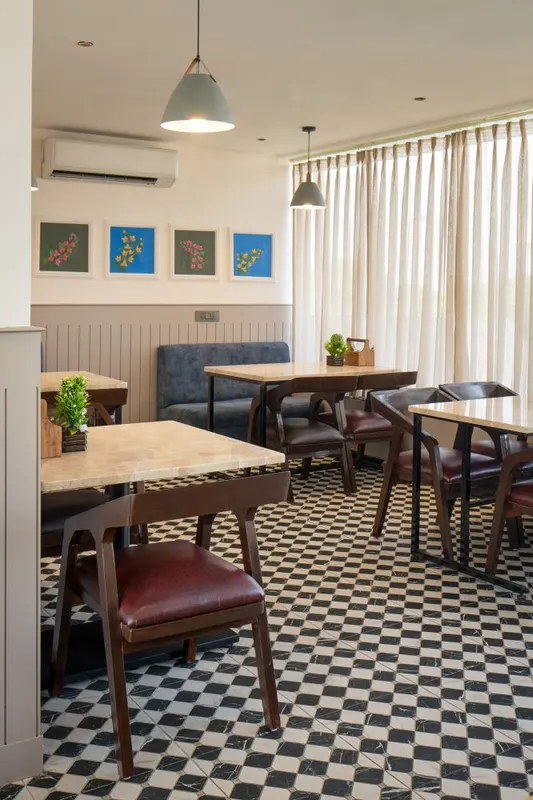
The rooftop restaurant crowns the experience, offering panoramic city views paired with locally inspired cuisine. Designed for both daytime leisure and evening gatherings, the space balances openness with intimacy through strategic shading, lighting, and art integration. Complementing this are flexible event and banquet spaces housed in the lower levels, designed to accommodate corporate meetings and social functions with equal elegance.
Through its material honesty, passive strategies, and culturally resonant design language, The Aldott Hotel exemplifies a progressive approach to boutique hospitality- one that is deeply contextual, environmentally conscious, and rooted in storytelling.
- Category
- architecture
- Type
- hospitality
- Location
- Gurugram
- Built-up area
- 15,500 sqft.
- Design firm
- Studio AVT Architects Pvt Ltd
- Principal designer
- Ankita Sweety & Pratyoosh Chandan