architecture
Twin Habitat
Featured work by Vinod & Ranju Singhi · Noida · December 4, 2025
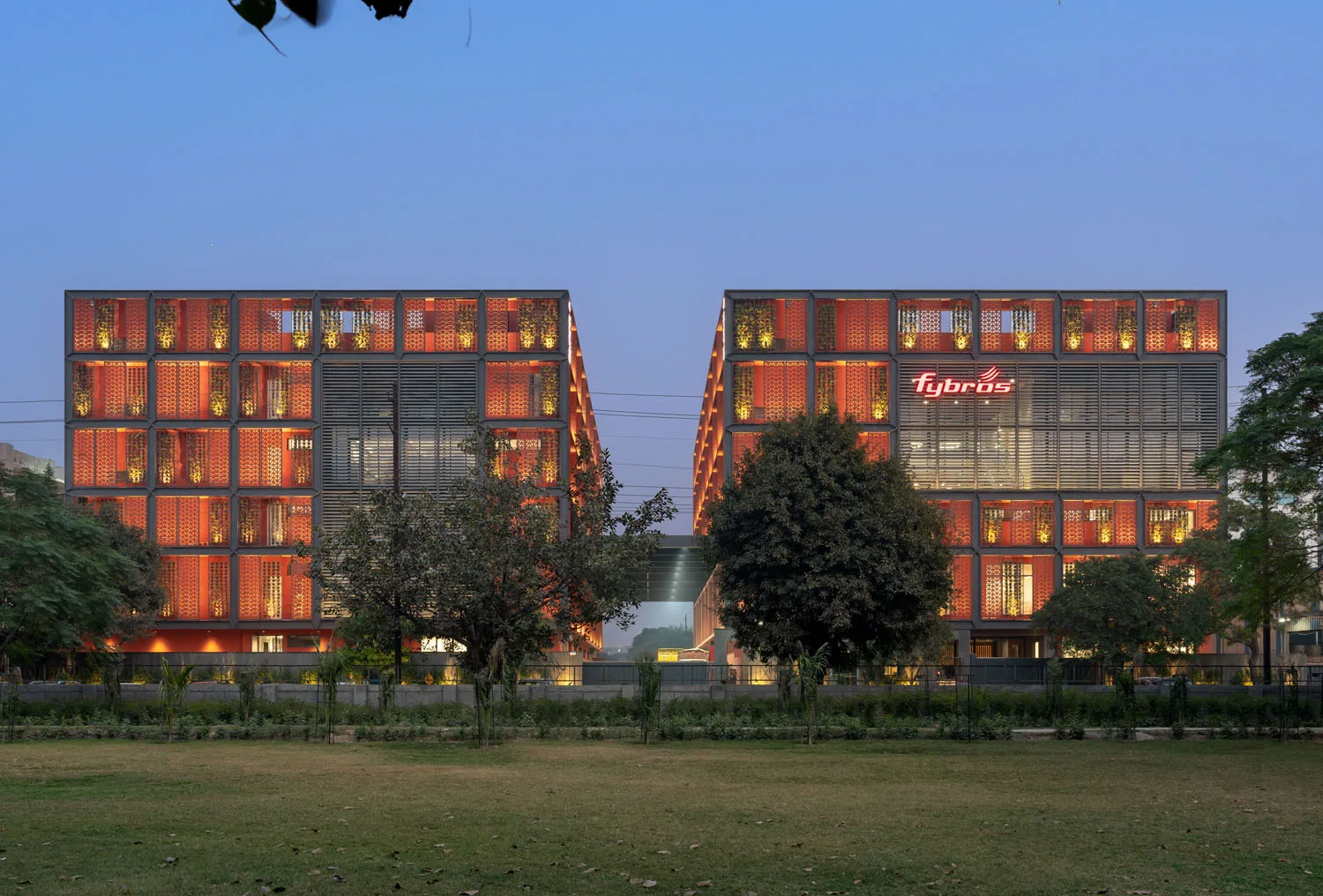
Every building tells a story- not just of structure, but of soul. With The Twin Habitat for Fybros in Sector 63, Noida, BASICS set out to redefine the possibilities of industrial architecture. On a 4,440 sq.m site with a built- up area of 1,80,000 sq.ft- including 36,000 sq.ft of office space- the project began as a functional requirement for warehousing, yet evolved into a nature- embracing, future- ready habitat that blends industry’s rugged efficiency with the calming rhythm of nature.
Designed for one of India’s leading electrical manufacturers, the project translates Fybros’ values of durability, efficiency, and sustainability into spatial experience. BASICS rooted the design in their Nature- Integrated Design (NID) philosophy- a twofold approach of Habitability and Sustainability. Habitability ensures user wellbeing through natural light, ventilation, and biophilia, while Sustainability reduces energy use, conserves resources, and prepares the building for long- term adaptability. The concept is further supported by Hedonistic Sustainability, which encourages responsible choices through comfort and delight.
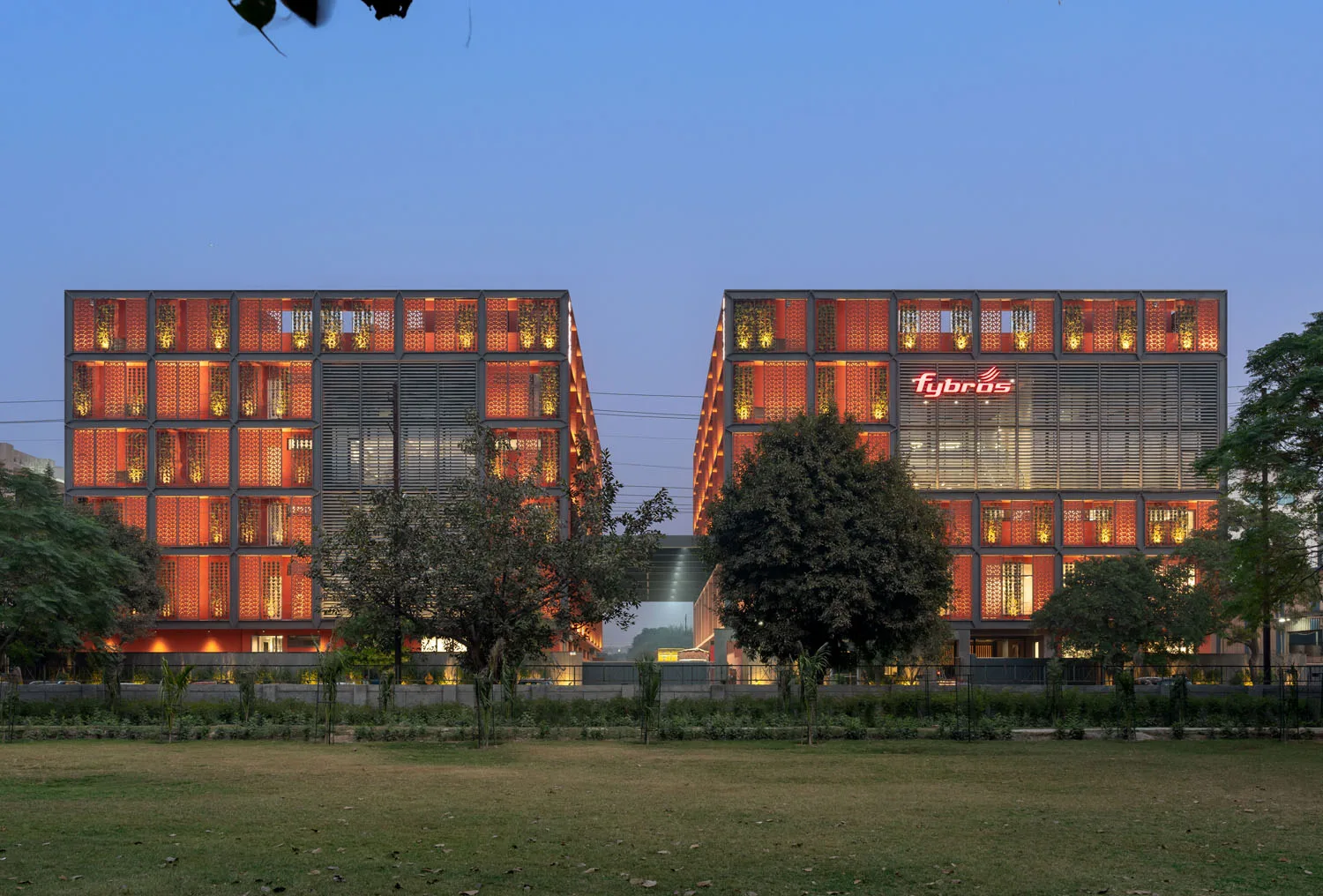
Zoning and circulation were shaped by real site constraints. With the west- facing front façade and a green buffer across the road, the design adopted a two- block configuration that separates warehouse functions from office movement while keeping both integrated. A shared loading zone sits between the blocks, while the workspace rises above the warehouse, ensuring efficient logistics without compromising pedestrian safety.
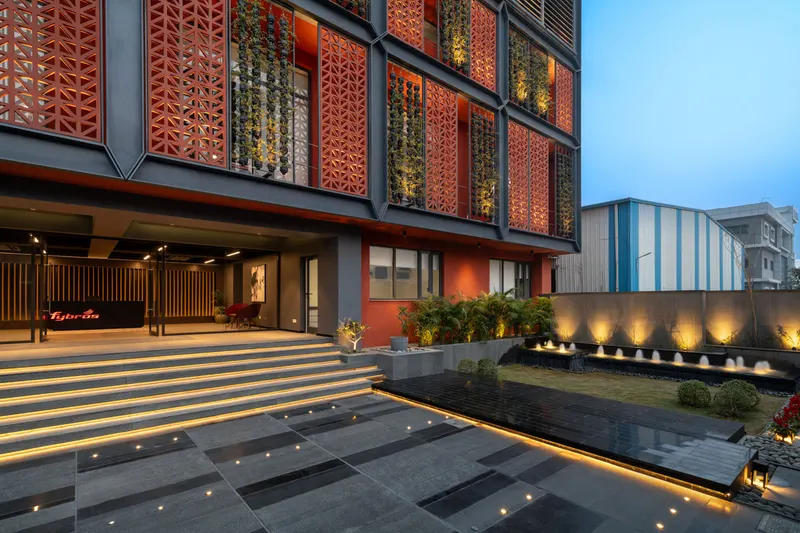
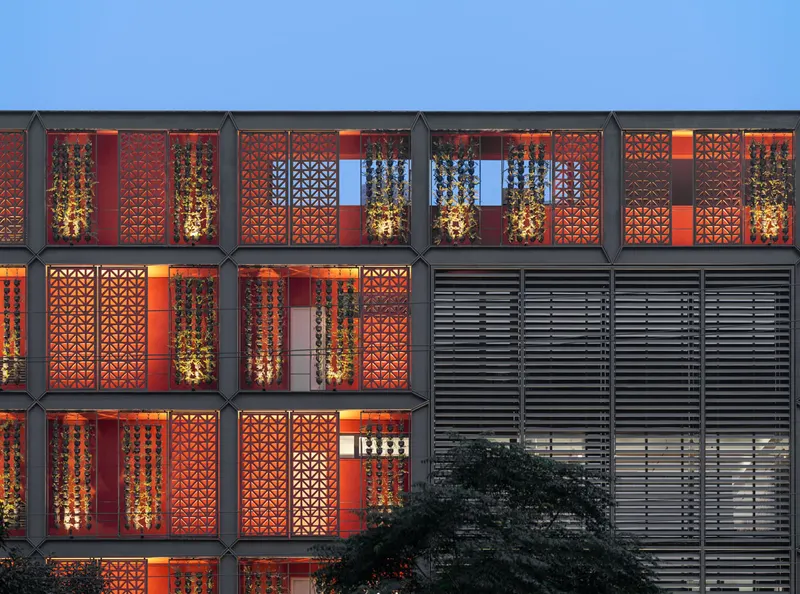
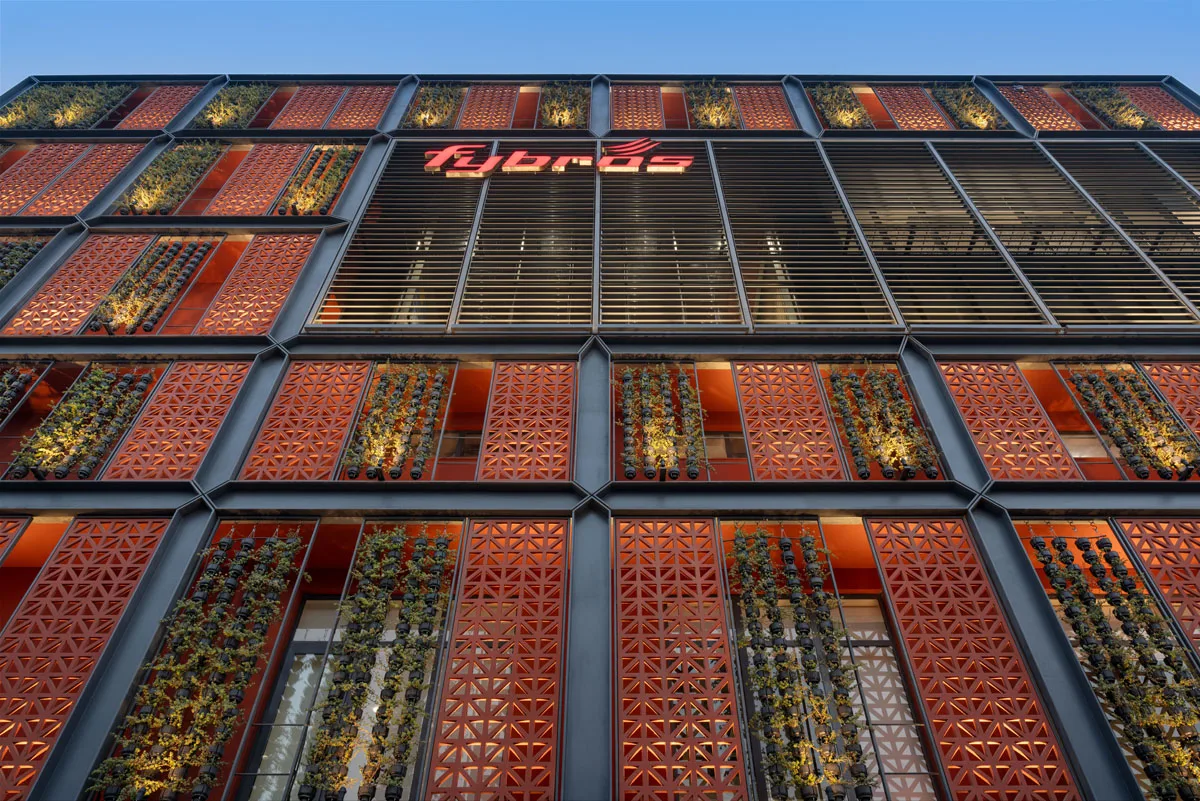
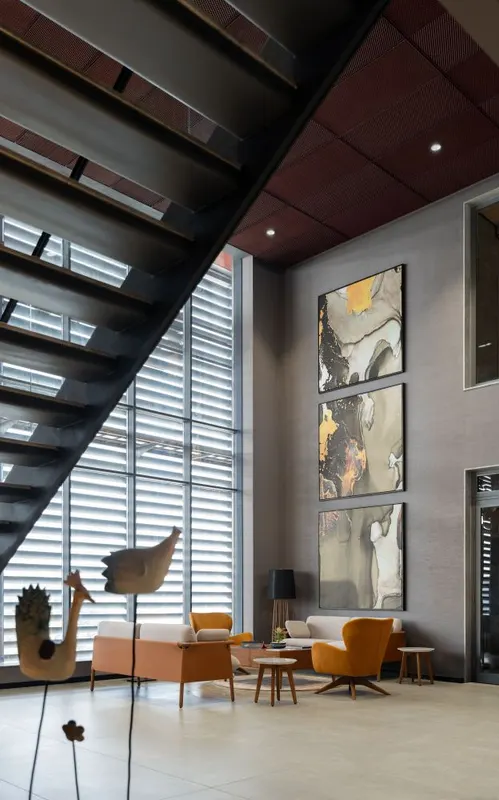
The façade became the project’s defining feature. A double- skin system of terracotta- toned GRC lattice and vertical greens shields the west side from harsh sunlight while allowing filtered air and daylight indoors. Deep projections and louvered windows on the south side balance glare and light penetration. These climate- responsive features give the building its distinctive identity while ensuring thermal comfort and better indoor air quality.
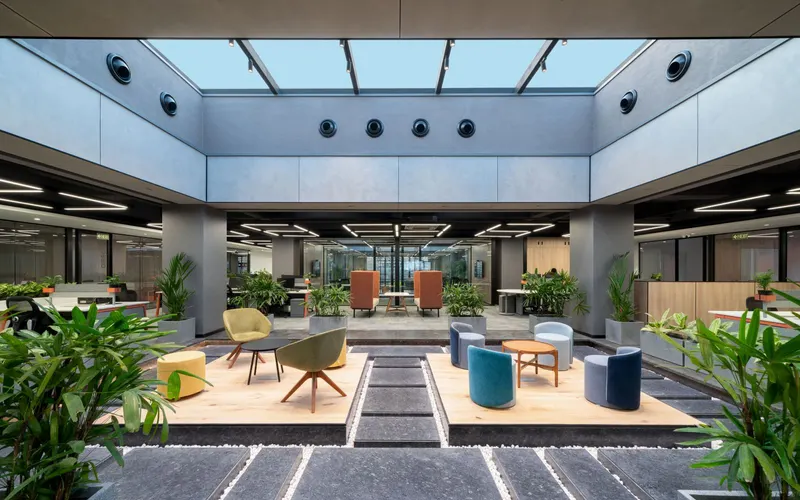
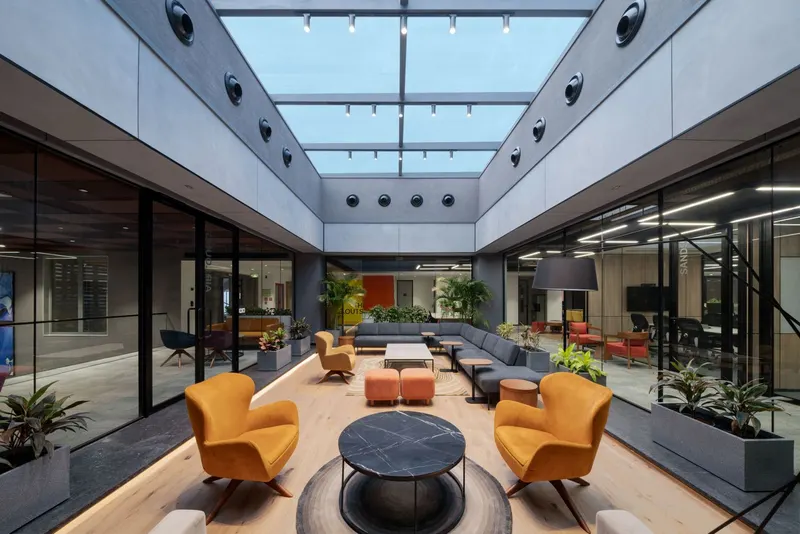
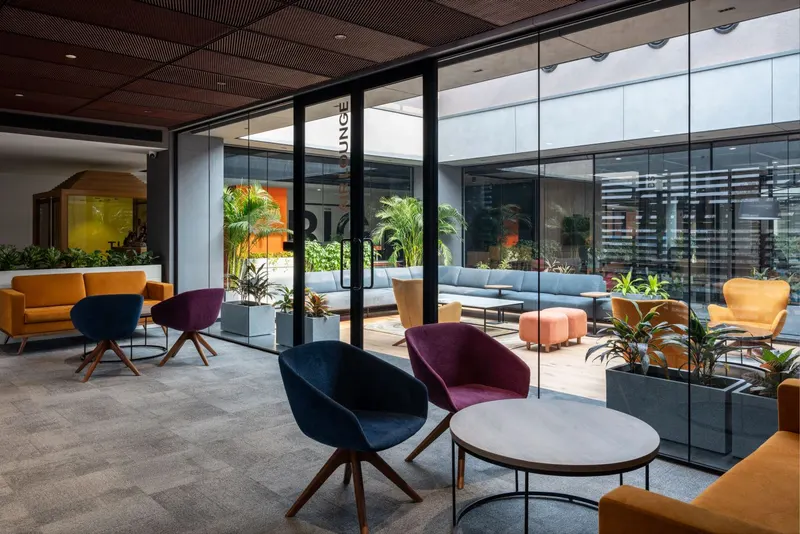
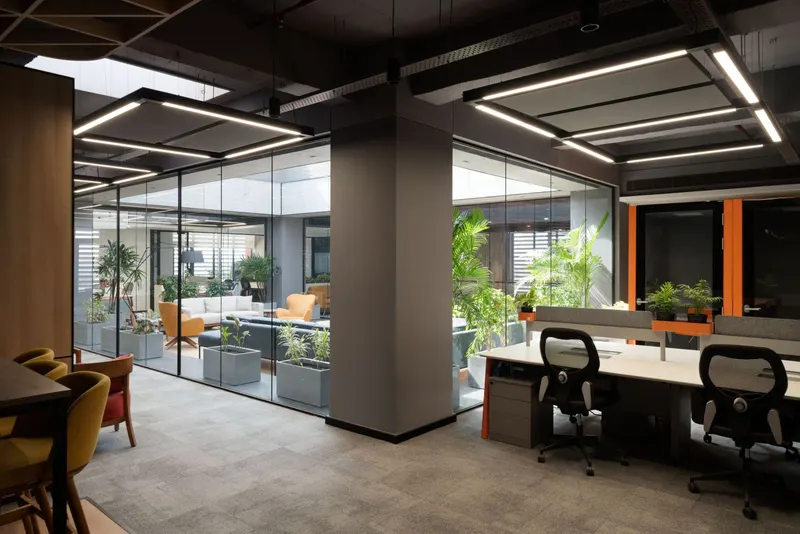
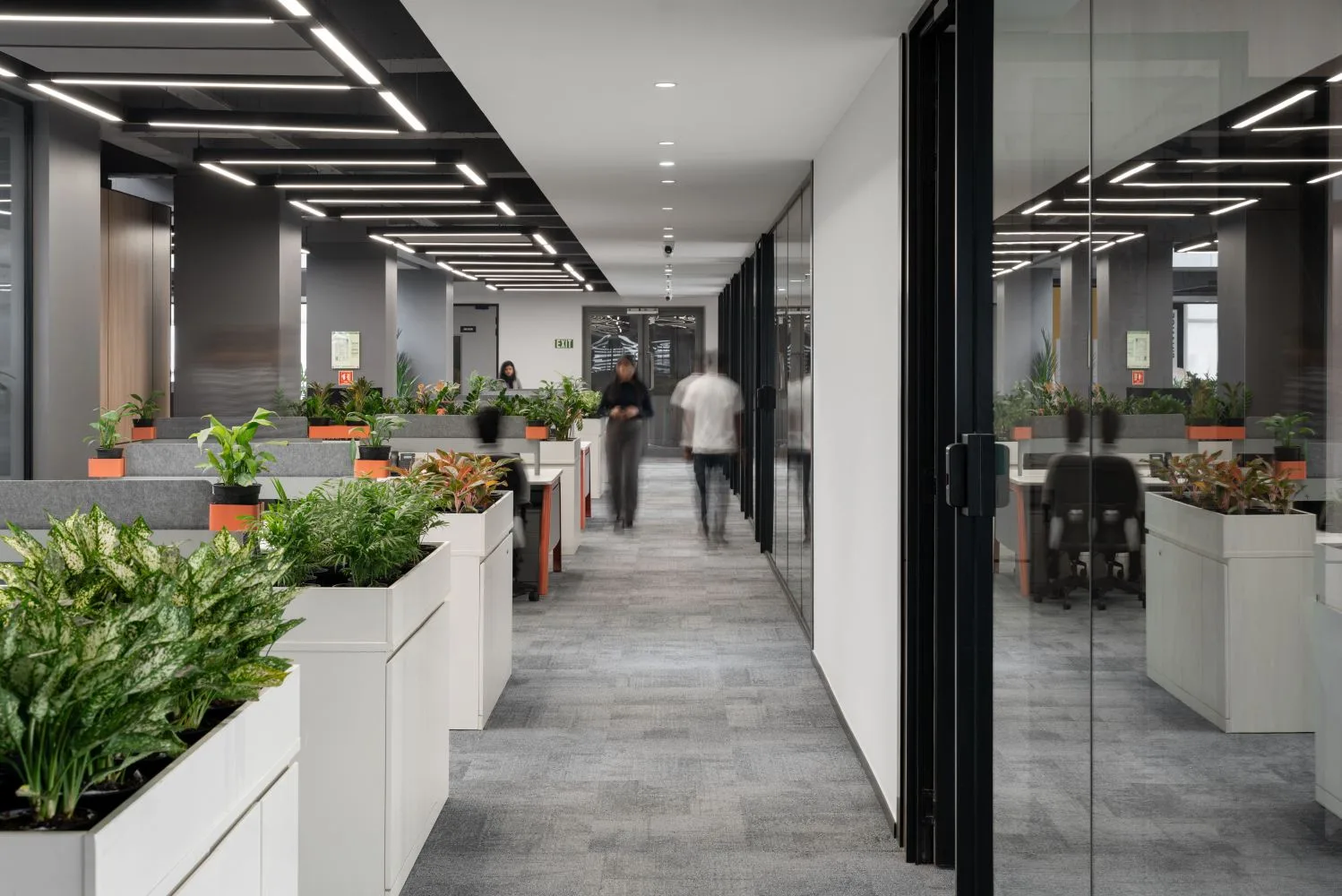
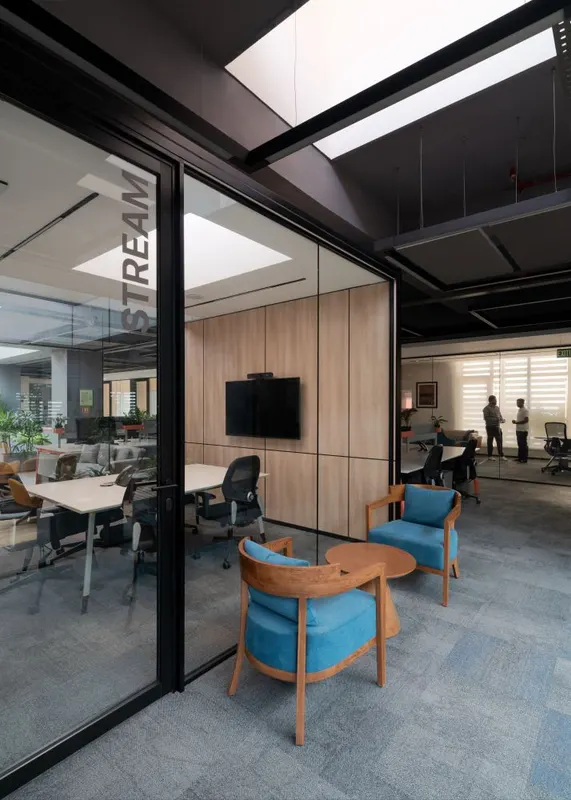
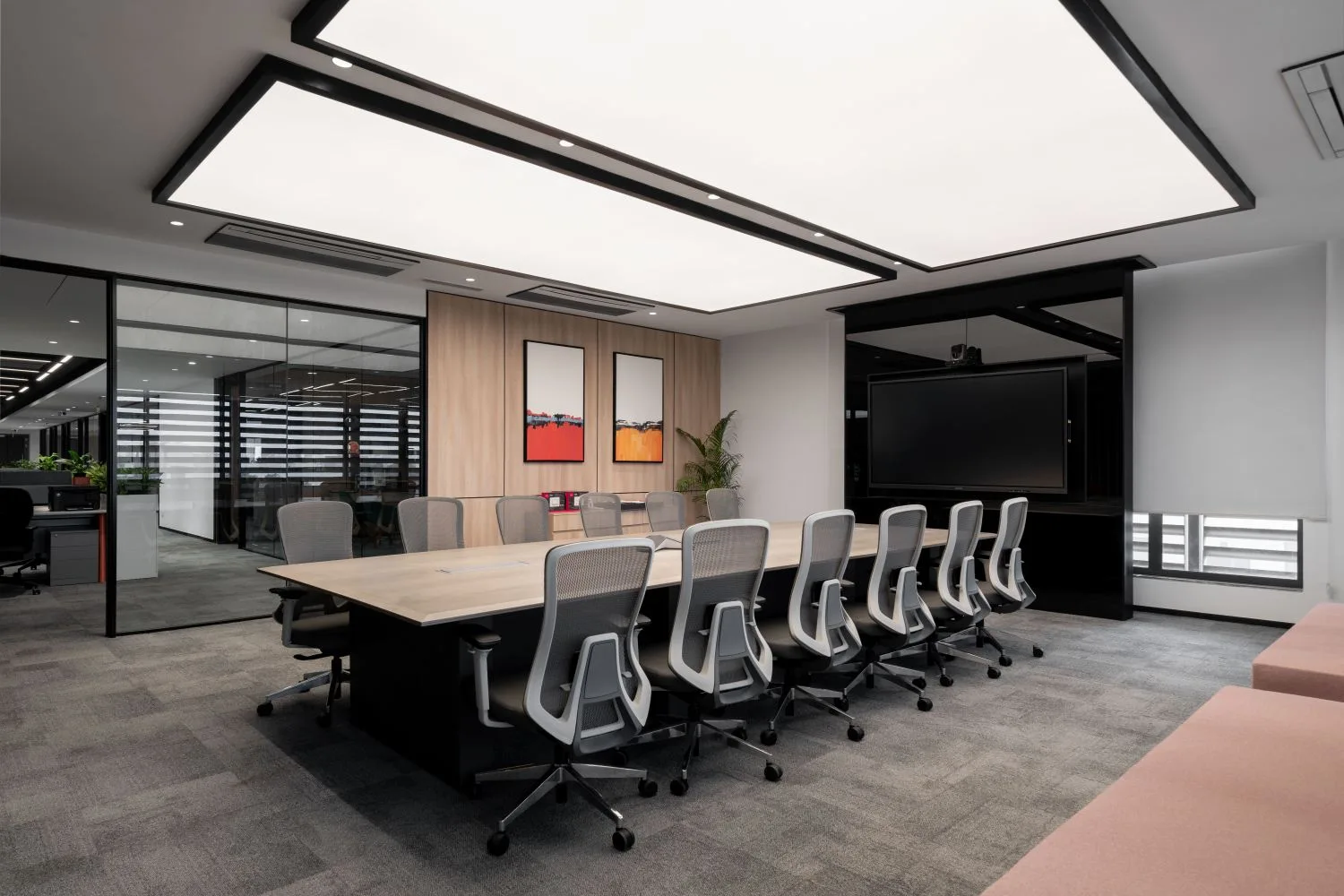
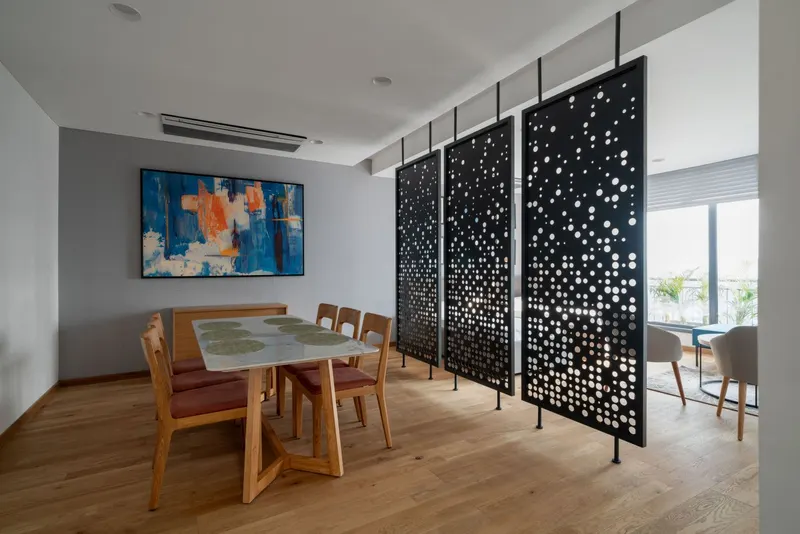
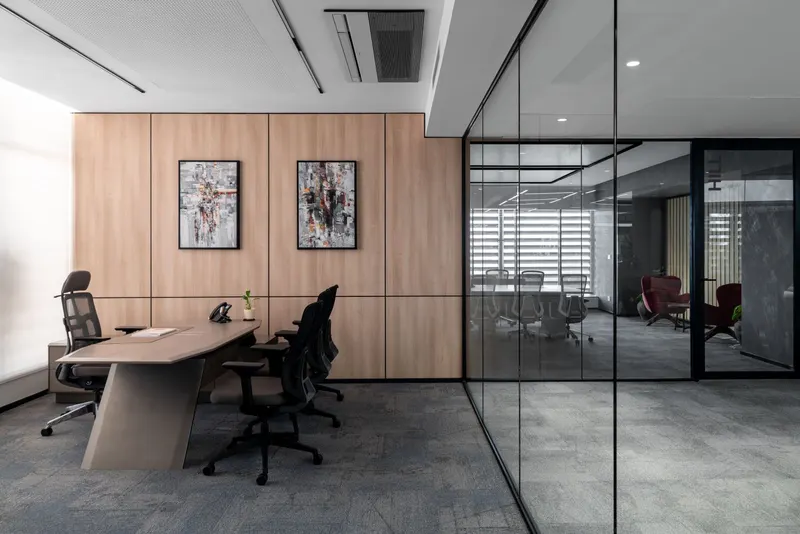
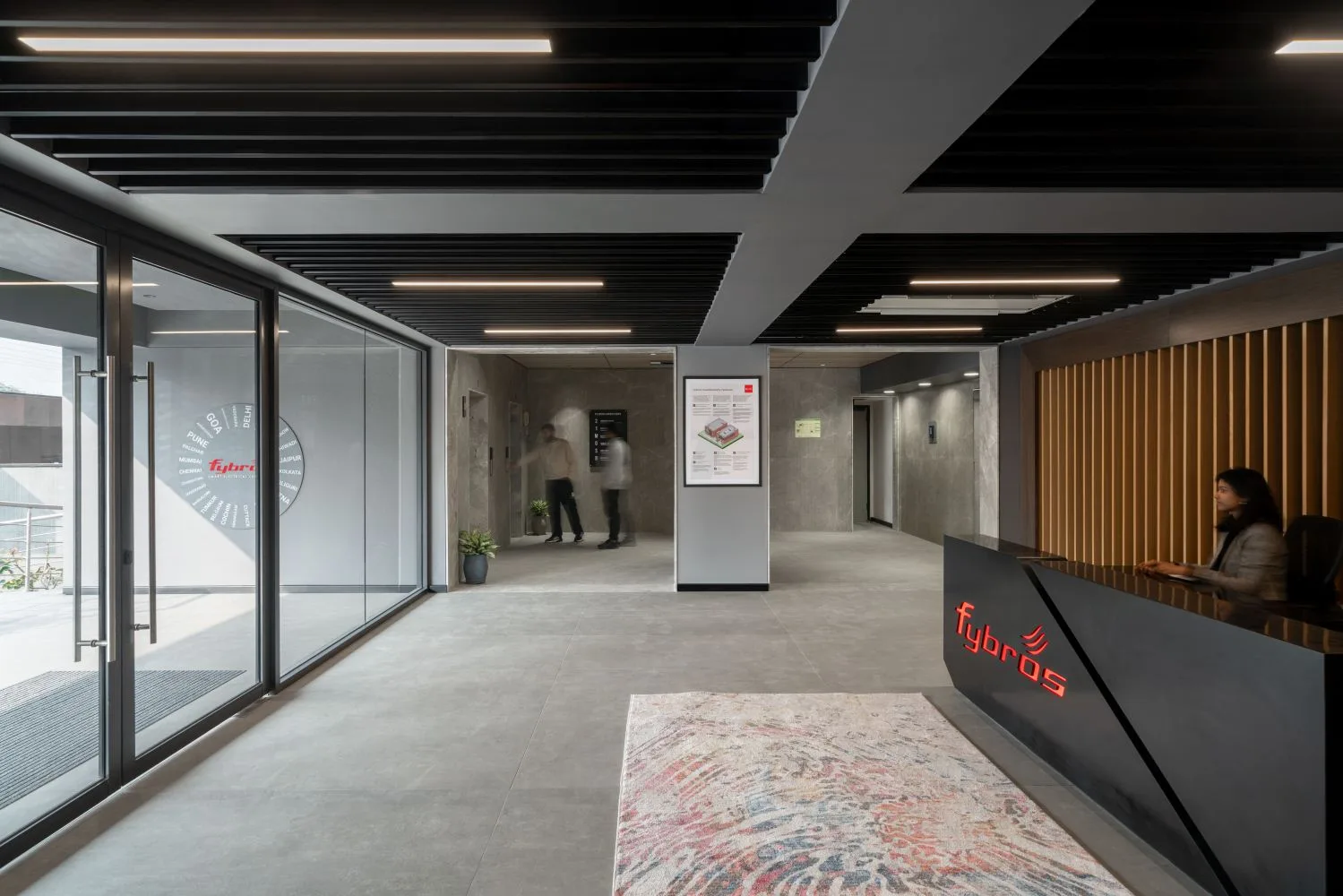
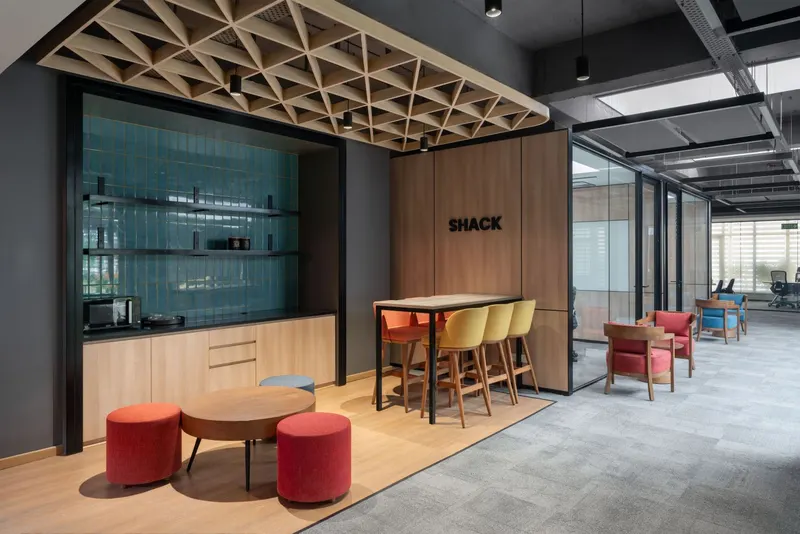
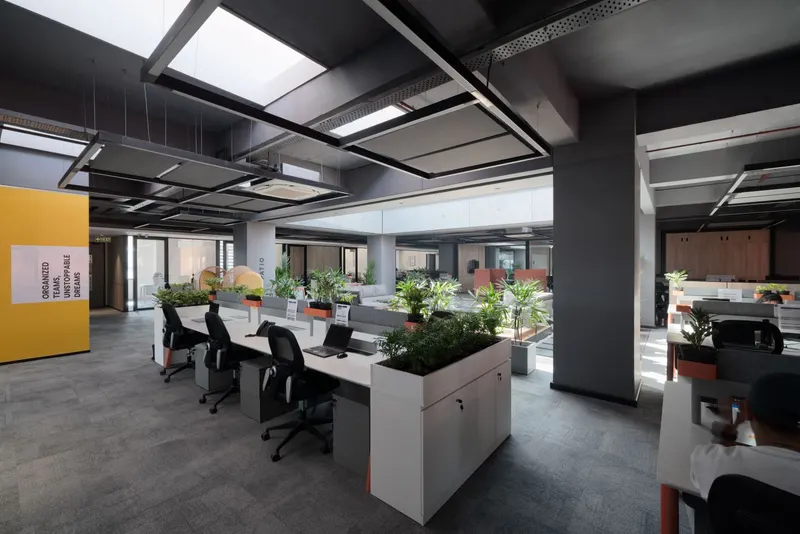
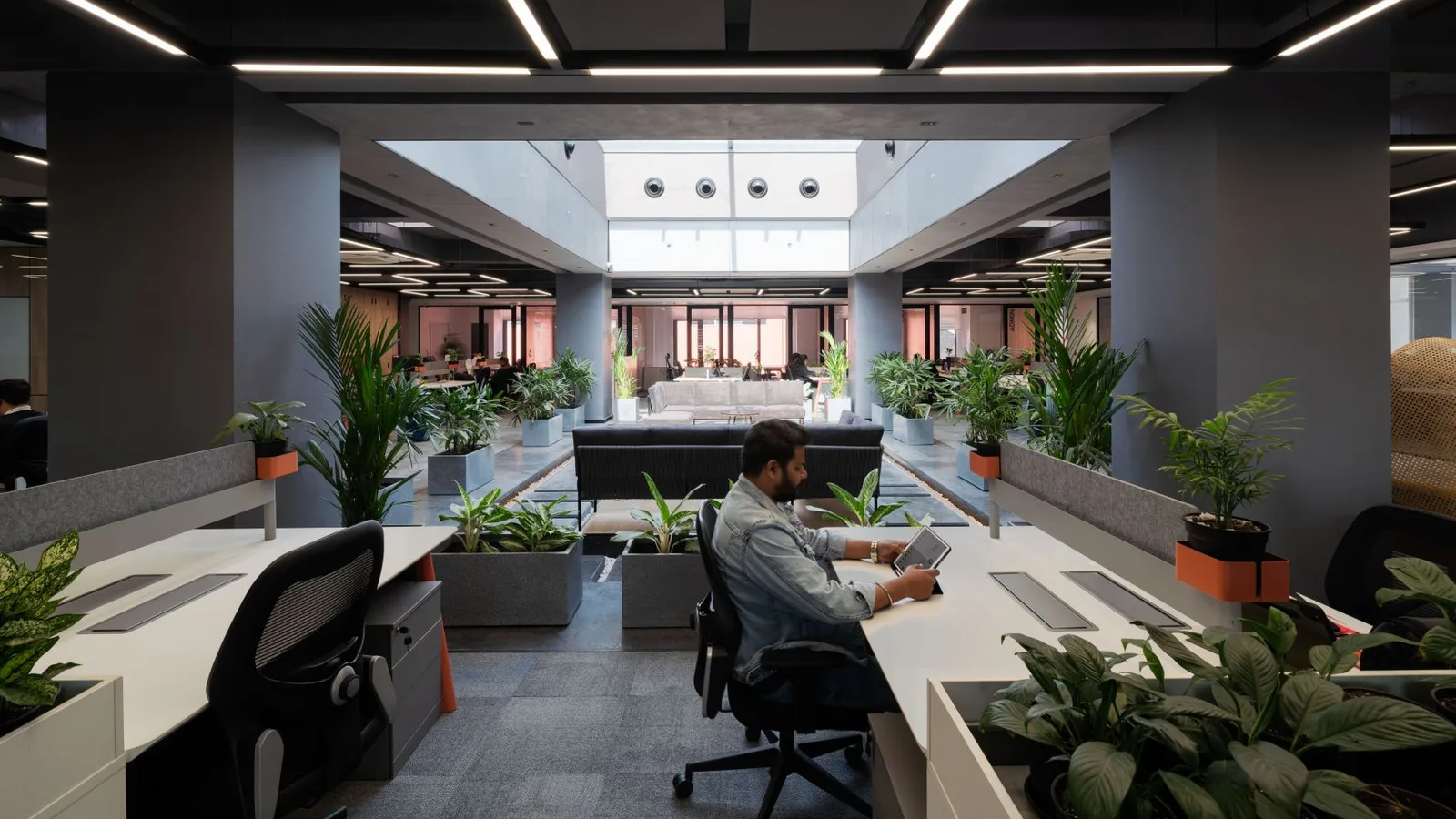
Inside, the warehouse prioritises the welfare of workers with shaded loading bays, ventilated storage halls, clear movement routes, and refuge balconies. Above, the 36,000 sq.ft corporate office unfolds as a people- centric environment featuring modular workstations, lounges beneath skylights, breakout zones, meeting pods, cafés, and a showroom. Smaller clusters of desks enhance privacy and acoustics, while abundant daylight and greenery uplift mood and productivity.
Sustainability measures are embedded throughout- from louvers and skylights that reduce heat gain to rainwater harvesting, wastewater recycling, low- VOC materials, and rooftop solar energy. These strategies collectively lower energy consumption by 30–40% and water use by nearly 60%.
Rooted in the Panch- Tatva philosophy, the design subtly integrates earth, water, fire, air, and sky through materiality, climate strategies, air purification, and natural light. The result is a workplace that feels grounded, healthy, and uplifting.
- Category
- architecture
- Type
- office
- Location
- Noida
- Site area
- 4,440 sqm
- Built-up area
- 1,80,000 sqft. of warehouse & 36,000 sqft. of office space
- Design firm
- BASICS Architects
- Principal designer
- Vinod & Ranju Singhi